
Sports physiotherapy may take a few sessions for minor issues, several weeks for complex injuries, or 9-12 months or longer for some post-surgical injuries such as ACL reconstruction before you return to sport. These timelines vary with the injury and the demands of your activity.
If you’re searching for a sports physiotherapist near me, it’s natural to want a clear idea of what to expect before changing your training, work, or daily routine. Pain in your knee, shoulder, ankle, neck, or back can affect how confidently you move. Rehabilitation should be tailored to your condition, current function, and sporting goals.
This guide explains what shapes a physiotherapy timeline, how care can adapt as your strength and movement improve, and what a gradual return to sport may involve. You’ll also learn how assessment, targeted rehabilitation, and return-to-activity planning can address sports-related pain and support your progress.
Key Takeaways
- Set expectations for rehab duration: minor issues may take a few sessions, while complex injuries can require several weeks or longer after surgery.
- See how your injury, movement, and sport demands shape a personalised rehabilitation plan.
- Understand how a gradual return-to-sport pathway can help build readiness for the demands of your activity.
- Learn how treatment can be tailored to pain affecting your knee, shoulder, ankle, neck, or back.
Common sports injuries and sport-specific injuries
Sports injuries range from muscle strains and sprains to joint pain and limitations after surgery. A runner with ankle pain, a swimmer with shoulder discomfort, and a football player with a knee injury each face different movement demands. Your sport, the affected area, and your symptoms all help shape assessment and rehabilitation.
Sports physiotherapy begins by understanding how the injury happened and which movements are affected. A physiotherapist may assess mobility, strength, balance, and sport-specific actions, such as changing direction or reaching overhead. This helps identify functional limits and guide treatment, rather than focusing on pain alone. Rehabilitation can then build the capacity you need for training and competition.
When choosing a sports physiotherapist in Singapore, look for relevant clinical training and experience assessing sports injuries. Your assessment should connect your symptoms with the movements your sport requires, then explain how therapy and rehabilitation can address them. A clear plan can set movement goals and review your progress.
Appointment times depend on the clinic’s schedule and available sessions. Your preferred timing and the appointment slots on offer will shape when you can begin care.
Some warning signs call for urgent medical attention before physiotherapy. According to the Singapore Civil Defence Force, breathlessness, loss of consciousness, excessive bleeding, major trauma, and stroke are emergencies. If someone collapses, is unconscious, or has chest pain or trouble breathing during or after exercise, call 995.
For a less urgent injury, early assessment can clarify which activities aggravate your symptoms and which remain manageable. A physiotherapist can tailor rehabilitation to your sport and progress your movement as your function improves. For example, a return-to-running plan may move from everyday walking to running drills, while a shoulder plan may restore reaching and sport-specific arm movements. This stepwise approach supports injury prevention and a more considered return to activity.
Personalised rehabilitation plans
Your treatment plan should reflect your injury, daily demands, and sporting goals. Complex musculoskeletal injuries may need several weeks of physiotherapy, while some post-surgical injuries require a longer progression.
Rehabilitation Stages and Return to Sport
A four-stage approach may progress from settling symptoms to restoring movement, building strength, and practising sport-specific tasks. These stages guide progression, but they don’t set a fixed timetable. A runner, for example, may move from comfortable walking to running, while a court-sport player may practise controlled changes of direction. Your physiotherapist can adjust each stage to your response.
After ACL reconstruction, returning to sport may take 9-12 months or longer. The treatment plan should account for the surgery, current strength, mobility, and sport demands. Look for clear goals at each stage, with running, lifting, and sport drills added as function develops. This helps you understand what each step is preparing you to perform.
Consultation and Rehabilitation Process
At your consultation, the physiotherapist reviews your injury or surgery history, symptoms, and goals. They assess relevant movement and strength, then explain how the findings shape treatment. Share which training movements trigger discomfort and what activities you hope to resume. These details connect the assessment to your everyday and sporting needs.
Sessions may combine guided exercise, movement practice, and progress reviews. The plan can change as your mobility and tolerance develop, rather than repeating the same exercises regardless of progress. For sprains, for instance, rehabilitation can focus on restoring controlled movement before adding more demanding activity. You can explore sports injury rehabilitation as part of this process.
For a complex injury, such as an ACL injury, agree on how progress will be assessed before moving on to sport-specific demands. A useful plan explains the next stage, the abilities it targets, and how those abilities relate to your sport. This makes rehabilitation easier to follow and helps you take an active role in decisions about returning to training.
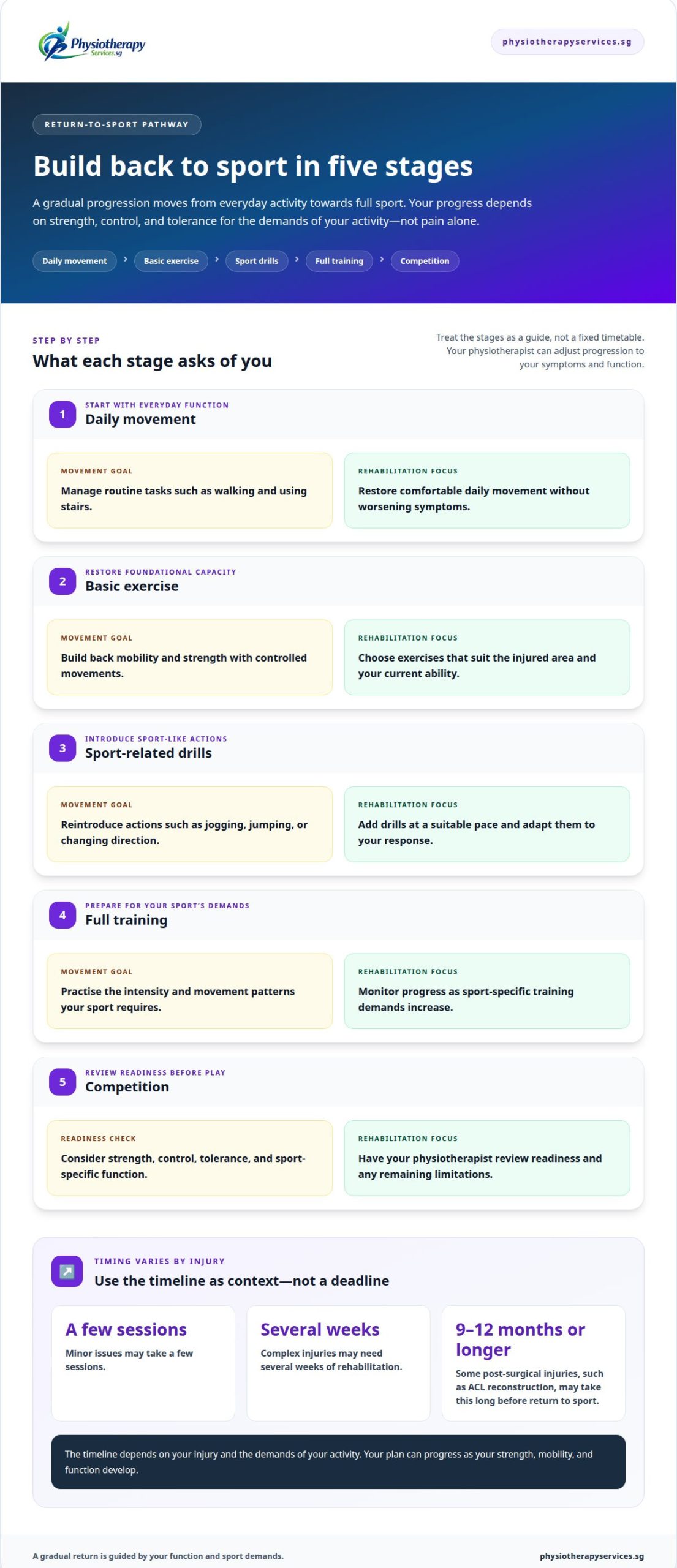
Five-stage return-to-sport pathway
Returning to exercise after a musculoskeletal injury involves more than reduced pain. A five-stage pathway can build tissue capacity and confidence, progressing from daily movement towards full sport. Progress depends on your strength, control, and tolerance for the demands your activity places on the affected area.
- Daily movement: Restore comfortable walking, stairs, or other routine tasks without worsening symptoms.
- Basic exercise: Rebuild mobility and strength with controlled movements that suit the injured area.
- Sport-related drills: Add actions such as jogging, jumping, or changing direction at a suitable pace.
- Full training: Practise the intensity and movement patterns your sport requires, with progress monitored.
- Competition: Return to play after your physiotherapist reviews readiness and remaining limitations.
These stages are a guide, not a fixed timetable. A tendon injury may need a different loading approach from a muscle strain, while a court athlete may need to practise repeated changes of direction before returning to full training. Your physiotherapist can adjust each stage to your symptoms, strength, and sport demands.
Strength testing can help assess whether the injured side is ready for higher demands. The Physio Circle commonly uses at least 90% strength symmetry as a return-to-sport benchmark. This compares strength between sides, but should be considered alongside movement quality and sport-specific function.
A study of 106 people after ACL reconstruction found lower reinjury rates among those who passed strength and hop tests before returning to sport. These tests can inform readiness, rather than guarantee an outcome. Clearance should reflect the full assessment, including how you control relevant movements and tolerate sport drills.
Ask how decisions about returning to sport connect assessment findings with your actual activity. A runner may build up to steady running before faster efforts, while a footballer may practise controlled cutting drills. A clear pathway shows what each stage assesses and what needs to improve before you progress.
Treatment for knee, shoulder, ankle, neck and back pain
Sports physiotherapists assess knee, shoulder, ankle, neck, and back pain by examining movement, strength, and activity demands. In Singapore, a doctor’s referral generally isn’t required to attend physiotherapy, although some insurance policies may require one for claims.
Treatment by Injured Body Area
For knee pain, assessment may consider bending, stair use, and control while running. Shoulder treatment may focus on reaching, lifting, and muscle strength. An ankle assessment may look at balance and walking, while care for neck or back pain can examine mobility during work, daily tasks, or sport. These examples connect treatment to the movements that matter to you.
A personalised plan responds to your symptoms and functional goals instead of treating every injury the same way. Your physiotherapist may use guided exercises and movement practice to build strength and restore mobility. For example, if your back hurts when you lift, you may practise controlled movement for that task before returning to heavier training.
Matching Physiotherapy to Your Condition
To find a suitable sports physiotherapist near me, consider whether the assessment addresses your specific injury and sport. Describe when the pain began, which movements trigger it, and how it affects your activity. If a shoulder injury limits your swimming, for instance, the assessment should consider the arm movements your stroke requires.
Physiotherapy can address sports injuries, joint pain, and neck or back pain, with progressions tailored to your movement goals. If you have a doctor’s diagnosis or imaging results, these can add context to your assessment. Your physiotherapist can consider this information alongside your symptoms when planning rehabilitation and monitoring changes.
Seek urgent medical attention before physiotherapy for emergencies such as major trauma, excessive bleeding, or loss of consciousness. The Singapore Civil Defence Force lists these as emergencies requiring urgent medical attention. For other concerns, a physiotherapist can assess how pain affects your activity and guide appropriate rehabilitation. Arrange an assessment for pain and movement concerns to discuss a plan suited to your condition.
Physiotherapy Services | Find a Physiotherapist in the United States
Physiotherapy services across Singapore provide care for sports injuries, pain, and changes in mobility. Physiotherapists use evidence-based treatment and personalised plans tailored to your condition, lifestyle, and recovery goals. If an injury limits your training or pain affects everyday movement, sports injury rehabilitation and pain management and physiotherapy treatment can support your rehabilitation. If you are searching for a reliable sports physiotherapist near me, professional clinics islandwide are ready to help you recover.
For recovery after surgery or difficulty travelling, post-surgery and mobility rehabilitation and home physiotherapy provide relevant care options. Discuss how your injury affects your activity and what you hope to return to. This helps align rehabilitation with your priorities.
Contact us to discuss your physiotherapy needs.
Take your next step towards returning to sport
Progressing towards sport is personal and shaped by your injury, daily demands, and goals. Discuss what you want to return to, what currently limits your movement, and what support could help you move forward. If you’re searching for a sports physical therapist near you, look for a plan that connects rehabilitation with the activities that matter to you.
Across the United States, physical therapy providers offer Sports Injury Rehabilitation, Post-Surgery and Mobility Rehabilitation, and Pain Management and Physiotherapy Treatment. Experienced physical therapists use evidence-based treatment and personalised plans to support recovery and improve mobility. Discussing your condition and priorities can help set a practical direction for care, whether you’re rebuilding after an injury or working towards activity after surgery.
Contact a physical therapy provider to discuss your rehabilitation needs and take a considered step towards your goals.
Frequently Asked Questions
How long does sports physiotherapy take?
There’s no single timeline for sports physiotherapy. Your rehabilitation schedule may depend on the injury, its effect on everyday movement, and the demands of your sport. A physiotherapist can review your progress and adjust the focus of care as your function changes. This helps you understand the goal of each stage instead of relying on a fixed calendar.
Do I need a doctor’s referral for physiotherapy in the United States?
Referral requirements for physiotherapy in the United States vary by state, insurance plan, and provider. Some insurance policies may require a doctor’s referral for coverage. If you have a diagnosis or medical notes, sharing them can give your physiotherapist useful context about your injury and previous care. This may help connect your assessment with information from your doctor.
What should I wear to a sports physiotherapy appointment?
Wear comfortable workout clothing that lets you move freely during assessment and treatment. Choose clothing that allows your physiotherapist to observe movements relevant to your sport, such as bending, reaching, or walking. If you’re attending for a knee or shoulder concern, clothing that allows movement of the affected area can make the assessment more practical.
What sports physiotherapy clinics are near me in the United States?
If you’re searching for a sports physiotherapist near you in the United States, look for a local provider that offers sports injury rehabilitation. Describe your injury, the sport or activity involved, and what you hope to return to. This context helps the physiotherapy team understand your priorities and discuss support tailored to your rehabilitation needs.
Can I receive sports physiotherapy at home in the United States?
Yes. Home physiotherapy may be available for people who prefer care at home or find travelling difficult. Discuss how your injury affects movement in your home environment, such as getting around your living space or managing everyday activities. This helps keep rehabilitation focused on the movements and routines that matter to you.
Does health insurance cover sports physiotherapy in the United States?
Coverage depends on your insurance policy and circumstances. Some insurance policies may require a doctor’s referral for claims. Review the terms that apply to your plan before relying on coverage, and keep relevant referral or treatment documents if your policy requires supporting information.