
Learning how to recover from a sports injury starts with understanding what happened: an injury may occur suddenly after trauma or develop gradually through repeated stress, while sprains affect ligaments and strains affect muscles or tendons. A useful recovery plan gives the injured area appropriate time to heal, then rebuilds movement, flexibility and strength through rehabilitation; returning too soon can interrupt healing, while too little movement may also slow progress. Many sports injuries heal within weeks or months, with timing shaped by the injury and how much function is affected, so easing back into training in stages and continuing prescribed exercises as symptoms improve can support steady progress. You can judge readiness to return through strength, mobility and functional testing rather than the calendar alone, and this guide explains how rehabilitation supports recovery, which habits can help, and how to rebuild activity gradually.
Key Takeaways
- Recognise how injuries can arise suddenly or develop through repeated stress, and learn ways to reduce future risk.
- Understand why recovery timelines vary and why returning to activity gradually matters.
- See how rehabilitation can rebuild strength, flexibility and movement after an injury.
- Learn how physiotherapy support can guide your recovery and help you assess readiness to return to sport.
What are sports injuries?
Sports injuries may happen suddenly after a fall or collision, or develop gradually through repeated stress. Acute injuries occur quickly, while chronic injuries build over time. A sprain affects a ligament, which connects bones. A strain affects a muscle or tendon; tendons connect muscles to bones. For example, a twisted ankle may involve a sprain, while an overstretched calf may involve a strain. The tissue involved helps determine symptoms, assessment, and rehabilitation needs.
Seek medical care for severe pain that is not improving, extreme bleeding, marked bruising or swelling, an obvious deformity, or inability to use the injured part. A healthcare provider can review your medical history and examine the affected area. Imaging may include an X-ray, CT scan, or MRI. Depending on the injury’s severity and the function lost, treatment may involve medicine, a cast or splint, joint reduction, or surgery.
Preventing sports injuries starts with a measured approach to training. When starting a new activity, ease into it instead of doing too much too soon. For example, increase running gradually rather than jumping straight into demanding sessions. Use sound technique, especially in repetitive or high-intensity sports, because poor form can place stress on the wrong tissues. Build strength and flexibility through suitable training, and continue prescribed rehabilitation exercises after symptoms ease. After an injury, return to activity gradually rather than immediately resuming full intensity. If pain, swelling, or limited movement returns as activity increases, pause your progression and seek clinical advice. These steps can reduce avoidable reinjury risk.
In the United States, falls account for more than 1 in 4 sports injuries. This highlights why attention to the conditions surrounding activity matters alongside training choices: a sudden fall can cause an acute injury, while repeated stress can lead to a chronic one. Recognising how an injury began can help describe what happened to a healthcare provider and support an assessment of the affected area.
When can I return to playing my sport or fitness activity?
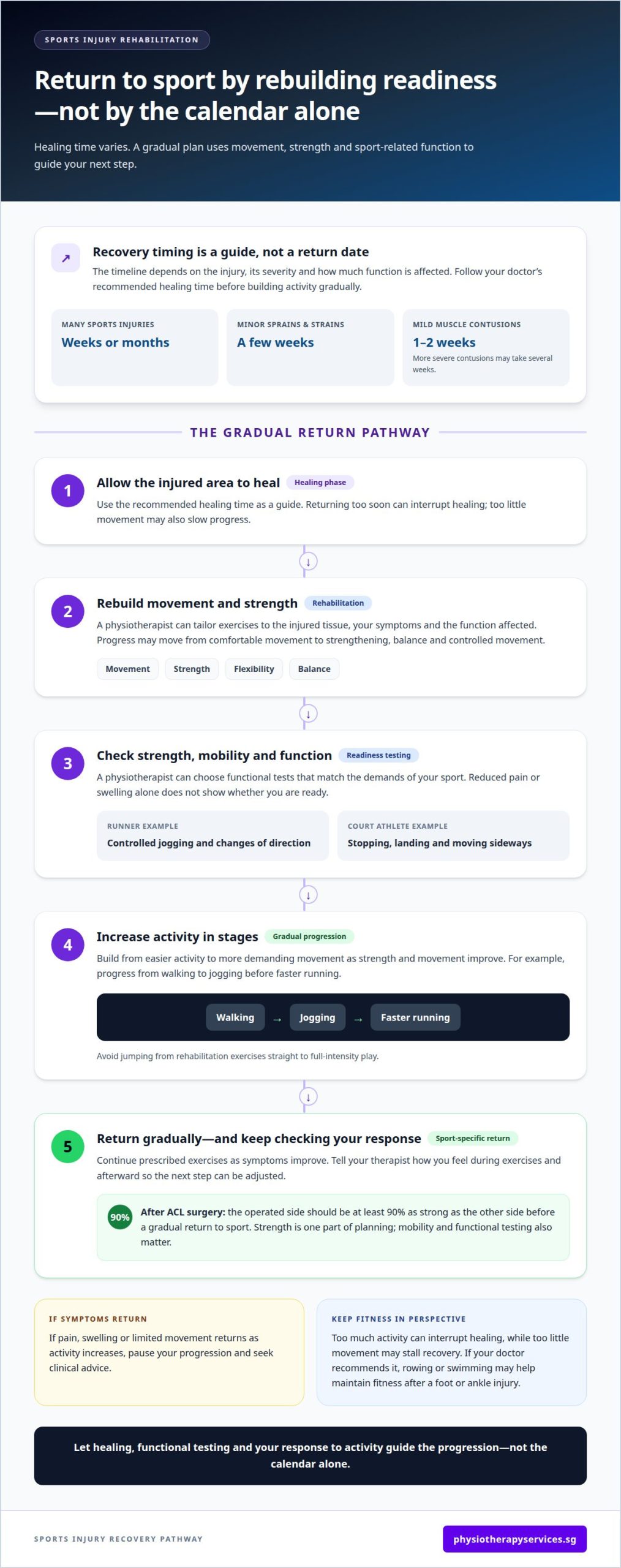
Recovery timelines vary according to the injury, its severity, and the function lost. Many sports injuries heal within weeks or months. Minor sprains and strains typically heal within a few weeks. Mild muscle contusions often improve within one to two weeks, while more severe contusions may take several weeks. These ranges are guides, not return dates. Follow your doctor’s recommended healing time, then increase activity gradually.
Readiness depends on more than reduced pain or swelling. A sports physiotherapist assesses strength, mobility, and functional movement using tests suited to your sport. For a runner, this may involve controlled jogging and changes of direction. For a court athlete, it may include stopping, landing, and moving sideways. These tasks help show whether your body can manage the demands of your sport.
Your therapist can pace rehabilitation by adjusting activity as your movement and strength improve. Help guide this process by describing your pain, swelling, and how you feel during exercises and afterward. Your feedback helps the therapist choose the next step, such as progressing from walking to jogging before faster running. Avoid jumping straight from rehabilitation exercises to full-intensity play.
After ACL surgery, the operated side should be at least 90% as strong as the other side before a gradual return to sport. This specific measure is one part of return planning; strength, mobility, and functional testing also matter. Returning before fully recovering from an earlier injury can increase reinjury risk. A gradual progression gives athletes time to rebuild strength and flexibility while observing how the injured area responds.
Too much activity can interrupt healing, but too little movement may stall recovery. If your doctor recommends it, rowing or swimming may help maintain fitness after a foot or ankle injury.
Sports injury rehabilitation and its goals
Knowing how to recover from a sports injury involves more than waiting for pain to ease. Rehabilitation helps restore movement, strength, and flexibility through a plan tailored to your injury and daily needs. After rest, a physiotherapist can guide when and how to resume movement, then adapt exercises to your response. For a muscle strain, treatment may progress from comfortable movement to strengthening exercises. Continuing prescribed exercises as symptoms improve helps maintain progress.
In Singapore, seek medical care for severe pain that is not improving, extreme bleeding, marked bruising or swelling, an obvious deformity, or inability to use the injured part. Arrange assessment if pain, swelling, or limited mobility persists without improvement. A physiotherapist can assess movement and function, then guide rehabilitation. Urgent symptoms need medical attention first.
Non-surgical treatment may suit injuries that do not require an operation. A physiotherapist can select exercises to build strength, balance, and controlled movement, based on the affected tissue and function lost. For example, rehabilitation after a rotator cuff injury may focus on shoulder movement and muscle control before demanding overhead activity. Exercises should match your symptoms and functional goals rather than follow a generic routine.
Choosing surgery or rehabilitation depends on the injury’s severity and how much function has been lost. A healthcare provider can assess these factors and explain suitable treatment options. Rehabilitation may also support recovery after surgery, with exercises adjusted to the repair and stage of healing. A clear plan for how to recover from a sports injury can account for both treatment and gradual return to movement. If you are unsure how to proceed, a clinical assessment can clarify the next step.
Tips for recovering from sports injuries
A physiotherapist starts by assessing how the injury happened and how it affects your movement. At a clinic, this may include reviewing your medical history and examining the injured area. The therapist considers pain, swelling, and function before recommending treatment. Severe pain that is not improving, extreme bleeding, an obvious deformity, or inability to use the injured part calls for medical attention. Knowing how to recover from a sports injury starts with identifying what needs care.
Early care depends on the injury and healing stage. During the first 24-48 hours after a suspected injury, RICE means Rest, Ice, Compression, and Elevation. A physiotherapist can explain whether these measures suit your injury and how to apply them safely. Ice or heat should be used only as your physical therapist recommends, since treatment needs can change as the tissue heals.
For ice, guidance may include applying an ice pack for 15-20 minutes every couple of hours during the first 24-48 hours. Compression may support the area and help minimise swelling, while elevation can help reduce inflammation. Your therapist can adapt this advice to the injured body part and your symptoms.
Ask a doctor or physiotherapist before using pain relief medicine for a sports injury. They can consider your injury, health history, and other medicines, then explain suitable options and possible risks. Follow their directions rather than changing a medicine or dose yourself. A sports medicine specialist may also guide your return to exercise when symptoms persist or rehabilitation needs adjustment. Keep scheduled therapy sessions, report changes in pain or movement, and follow your prescribed plan. These practical steps support recovery from a sports injury, with treatment shaped around your progress rather than a calendar.
Physiotherapy Services | Find a Physiotherapist in the United States: Sports Injury Rehabilitation
Singapore Physio Therapy Services | Find Physiotherapist Singapore provide sports injury rehabilitation to help you rebuild movement and strength after an injury. Physiotherapists tailor evidence-based treatment to your condition, daily demands, and recovery goals. If pain, reduced mobility, or uncertainty about exercise is disrupting your progress, guided support can help clarify your next steps.
During an assessment, the physiotherapist considers your symptoms, movement, and functional limits, then shapes a plan around your needs. Sessions may focus on restoring mobility, building strength, and adapting activity as your response changes. Your feedback about discomfort during daily tasks or exercise helps guide adjustments. Treatment is tailored to your presentation, with the plan adapted as your strength, comfort, and activity needs change.
If your injury required an operation, post-surgery and mobility rehabilitation can support your work to rebuild movement and function. Pain management and physiotherapy treatment can address symptoms that limit rehabilitation, alongside exercises selected for your needs. These services may suit you if pain persists, movement remains restricted, or recovery feels difficult to manage independently.
Travel can be difficult during an injury or while recovering from surgery. Home physiotherapy in Singapore brings physiotherapy support to your home, where a therapist can work with you on movement and rehabilitation goals. Practising functional tasks in your own environment, such as walking between rooms or standing from a chair, can connect exercises with everyday activity.
For support with your recovery, contact Singapore Physio Therapy Services | Find Physiotherapist Singapore.
Frequently Asked Questions
How long does it take for a muscle contusion to heal?
A mild muscle contusion often improves within one to two weeks, while a more severe contusion may take several weeks to heal. The extent of bruising and how comfortably you can move the affected area can help show how recovery is progressing. If pain, swelling, or limited mobility is not improving, seek medical advice rather than relying on the expected timeline alone.
How long will my recovery take?
Recovery may take days, weeks, or months, depending on the injury and how much function has been affected. A minor injury may settle sooner, while an injury requiring surgery or other medical intervention may take several months. Your sport’s physical demands also shape the return process. A physiotherapist can adjust your rehabilitation plan as your movement and strength change.
Is It Just Soreness or an Injury?
Post-exercise soreness and an injury can feel similar, so pay attention to how symptoms affect movement and daily activities. Pain that limits your ability to use the body part, or swelling and discomfort that are not improving, deserves assessment. Seek medical care for severe pain that is not improving, extreme bleeding, an obvious deformity, or inability to use the injured area.
What is the difference between a sprain and a strain?
A sprain affects a ligament around a joint, while a strain affects a muscle or tendon. For example, pain after twisting a joint may involve a sprain; discomfort after overstretching a muscle may involve a strain. Both can affect movement, and symptoms alone may not identify the exact tissue involved. An assessment can clarify the injury and guide suitable rehabilitation.