
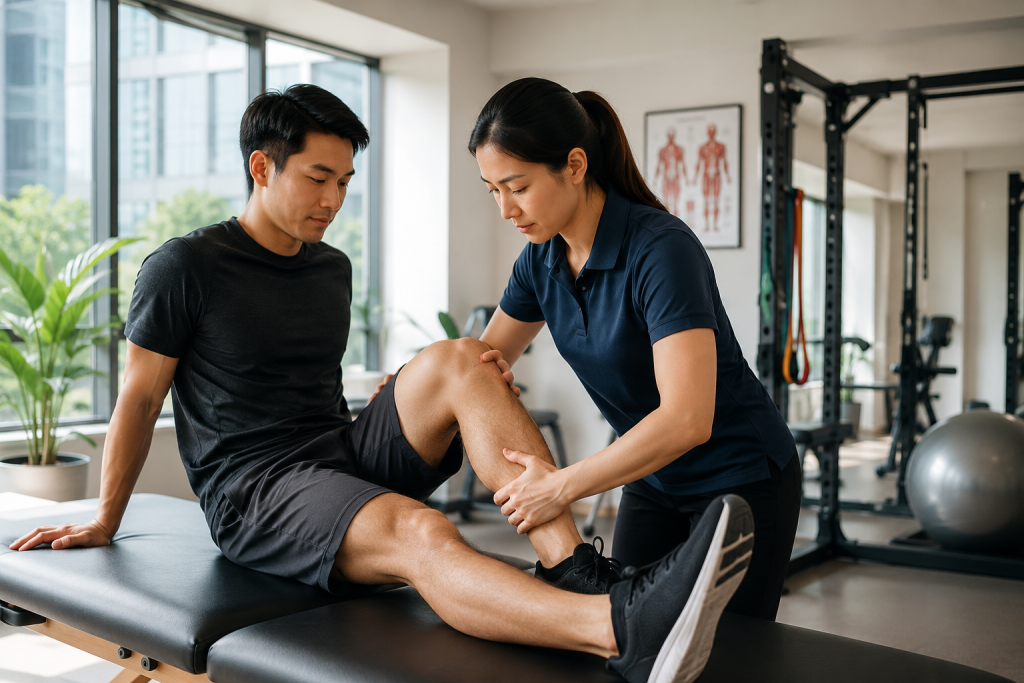
Recover Stronger, Move Better, Perform at Your Best
Sports injuries can affect anyone, from competitive athletes and weekend warriors to fitness enthusiasts and individuals who simply enjoy staying active. Whether you are dealing with a muscle strain, ligament injury, tendon pain, joint discomfort, or a recurring sports-related condition, professional sports physiotherapy can help you recover safely and return to the activities you enjoy.
Our sports physiotherapy services in Singapore are designed to support injury recovery, improve physical performance, prevent future injuries, and help individuals regain confidence in movement. Through personalised assessment, evidence-based treatment, and structured rehabilitation programmes, we help clients recover effectively and achieve their health and fitness goals.
What Is Sports Physiotherapy?
Sports physiotherapy is a specialised branch of physiotherapy focused on the prevention, diagnosis, treatment, and rehabilitation of sports and exercise-related injuries.
Unlike general injury management, sports physiotherapy takes into consideration the physical demands of your chosen sport, activity level, training intensity, movement patterns, and performance goals.
The objective is not only to relieve pain but also to restore optimal function, mobility, strength, balance, and coordination so that you can safely return to sports and physical activities.
Sports physiotherapy can benefit:
- Professional athletes
- Amateur athletes
- Gym enthusiasts
- Marathon runners
- Cyclists
- Swimmers
- Tennis players
- Golfers
- Football players
- Basketball players
- Fitness enthusiasts
- Active adults
- Students participating in sports
- Individuals recovering from sports injuries
Regardless of your fitness level, sports physiotherapy can play an important role in maintaining physical health and improving performance.
Common Sports Injuries We Treat
Sports participation places repeated stress on muscles, tendons, ligaments, bones, and joints. Over time, this stress can result in acute injuries or chronic conditions.
Some of the common sports injuries treated through physiotherapy include:
Sprains and Strains
Sprains occur when ligaments are stretched or torn, while strains involve injuries to muscles or tendons.
Common examples include:
- Ankle sprains
- Hamstring strains
- Groin strains
- Calf muscle injuries
- Wrist sprains
- Shoulder strains
Proper rehabilitation helps restore stability, strength, and mobility while reducing the risk of re-injury.
Knee Injuries
The knee is one of the most commonly injured joints in sports.
Sports physiotherapy can assist with:
- Ligament injuries
- Meniscus injuries
- Patellofemoral pain syndrome
- Runner’s knee
- Jumper’s knee
- Knee instability
- Post-surgical rehabilitation
Targeted strengthening and movement retraining help support long-term recovery.
Shoulder Injuries
The shoulder is highly mobile and vulnerable to injury during overhead sports and repetitive movements.
Common shoulder conditions include:
- Rotator cuff injuries
- Shoulder impingement
- Frozen shoulder
- Shoulder instability
- Tendon irritation
- Muscle imbalances
Physiotherapy helps restore range of motion and functional strength.
Tendon Injuries
Tendons can become irritated due to repetitive stress and overuse.
Examples include:
- Achilles tendinopathy
- Tennis elbow
- Golfer’s elbow
- Patellar tendinopathy
- Rotator cuff tendinopathy
Sports physiotherapy focuses on progressive loading and strengthening strategies to encourage healing.
Back Pain
Sports and exercise can place significant demands on the spine.
Common issues include:
- Lower back pain
- Muscle strains
- Disc-related discomfort
- Postural dysfunction
- Core weakness
Treatment often includes mobility exercises, core strengthening, and movement correction.
Hip Injuries
The hips play a critical role in nearly every sporting activity.
Sports physiotherapy can address:
- Hip impingement
- Hip flexor strains
- Gluteal weakness
- Hip instability
- Groin pain
Improving hip strength and mobility often contributes to better athletic performance.
Signs You May Need Sports Physiotherapy
Many individuals delay treatment until symptoms become severe. Early intervention often leads to better outcomes and shorter recovery periods.
You may benefit from sports physiotherapy if you experience:
- Persistent pain during exercise
- Reduced flexibility
- Limited range of motion
- Swelling around joints
- Recurrent injuries
- Muscle weakness
- Joint instability
- Difficulty returning to sports
- Reduced performance levels
- Pain after training sessions
Seeking professional assessment early can help prevent minor issues from becoming major injuries.
Comprehensive Sports Physiotherapy Assessment
Every successful rehabilitation programme begins with a detailed assessment.
During your initial consultation, our physiotherapists evaluate:
Injury History
Understanding how the injury occurred provides valuable insights into potential contributing factors.
We review:
- Previous injuries
- Current symptoms
- Activity levels
- Training routines
- Exercise habits
- Medical history
Movement Analysis
Movement patterns can reveal underlying dysfunctions that contribute to injury.
Assessment may include:
- Walking analysis
- Running mechanics
- Squat assessment
- Jumping mechanics
- Landing techniques
- Sport-specific movements
Strength Testing
Muscle weakness often contributes to injury risk.
Strength testing helps identify:
- Muscle imbalances
- Weak muscle groups
- Asymmetry between limbs
- Functional deficits
Flexibility Assessment
Restricted mobility can increase stress on muscles and joints.
We assess flexibility in key areas including:
- Hamstrings
- Quadriceps
- Hip flexors
- Calves
- Shoulders
- Spine
Functional Evaluation
Functional testing allows us to determine your readiness for rehabilitation progression and eventual return to sport.
Personalised Sports Injury Rehabilitation
No two injuries are identical.
A personalised rehabilitation programme is developed based on your:
- Injury type
- Severity
- Physical condition
- Sport participation
- Performance goals
- Recovery timeline
The rehabilitation process is carefully structured to support gradual and sustainable recovery.
Pain Management and Recovery
Pain can limit movement and interfere with daily activities.
Sports physiotherapy aims to reduce pain through a combination of techniques designed to support tissue healing and restore normal function.
Treatment approaches may include:
- Manual therapy
- Soft tissue mobilisation
- Joint mobilisation
- Therapeutic exercises
- Stretching programmes
- Mobility training
- Postural correction
- Activity modification
The goal is to address the underlying cause of pain rather than simply managing symptoms.
Strength and Conditioning
Rehabilitation extends beyond pain relief.
Many injuries occur because certain muscles are weak, underactive, or unable to cope with sporting demands.
Sports physiotherapy often incorporates strength training to improve:
- Muscle endurance
- Explosive power
- Joint stability
- Functional strength
- Athletic performance
Strength-based rehabilitation helps prepare the body for safe return to activity.
Injury Prevention Programmes
Preventing injuries is often easier than treating them.
Sports physiotherapy can identify risk factors that increase the likelihood of future injuries.
Common injury prevention strategies include:
- Movement correction
- Flexibility improvement
- Strength training
- Core stability exercises
- Balance training
- Sports-specific conditioning
- Warm-up education
- Recovery strategies
Preventive care helps athletes remain active and perform consistently throughout the year.
Return-to-Sport Rehabilitation
One of the most important aspects of sports physiotherapy is determining when it is safe to return to activity.
Returning too early can significantly increase the risk of re-injury.
A structured return-to-sport programme typically includes:
Phase 1: Pain and Inflammation Management
The initial phase focuses on:
- Reducing discomfort
- Protecting injured tissues
- Restoring gentle movement
Phase 2: Mobility Restoration
As symptoms improve, rehabilitation focuses on:
- Restoring joint mobility
- Improving flexibility
- Re-establishing movement quality
Phase 3: Strength Development
Progressive strengthening exercises help rebuild physical capacity.
Phase 4: Functional Training
Sport-specific exercises prepare the body for real-world demands.
Examples include:
- Agility drills
- Direction changes
- Jumping
- Sprinting
- Balance exercises
Phase 5: Return to Sport
Once functional goals are achieved, individuals can gradually resume participation under professional guidance.
Sports Physiotherapy for Runners
Running injuries are among the most common sports-related conditions.
Common issues include:
- Runner’s knee
- Shin splints
- Achilles tendon pain
- Plantar heel pain
- IT band syndrome
- Hip pain
Sports physiotherapy can identify biomechanical issues and develop targeted treatment plans to improve running efficiency and reduce injury risk.
Sports Physiotherapy for Gym Enthusiasts
Weight training and high-intensity workouts can place significant stress on the body.
Common gym-related injuries include:
- Shoulder pain
- Lower back pain
- Knee pain
- Muscle strains
- Tendon injuries
Physiotherapists can assess exercise techniques, identify movement limitations, and recommend modifications to improve safety and performance.
Sports Physiotherapy for Team Sports
Athletes participating in team sports often experience rapid changes in direction, jumping, sprinting, and physical contact.
Sports physiotherapy can assist with injuries related to:
- Football
- Basketball
- Volleyball
- Rugby
- Hockey
- Netball
Comprehensive rehabilitation helps athletes return to competition with confidence.
Sports Physiotherapy for Racquet Sports
Racquet sports require repetitive upper-body movements that can contribute to overuse injuries.
Common conditions include:
- Tennis elbow
- Shoulder pain
- Wrist injuries
- Rotator cuff issues
Treatment focuses on improving movement efficiency, reducing strain, and restoring performance.
Benefits of Sports Physiotherapy
Sports physiotherapy offers numerous benefits beyond injury recovery.
These include:
Faster Recovery
Structured rehabilitation helps optimise healing and improve recovery timelines.
Reduced Risk of Re-Injury
Addressing underlying weaknesses reduces future injury risk.
Improved Mobility
Enhanced flexibility and joint mobility support better movement quality.
Better Athletic Performance
Efficient movement patterns contribute to improved performance outcomes.
Increased Strength
Targeted strengthening improves resilience and physical capacity.
Enhanced Confidence
Athletes often regain confidence when returning to sport after completing a structured rehabilitation programme.
Why Choose Professional Sports Physiotherapy?
Sports injuries are often more complex than they initially appear.
Simply resting until pain subsides may not address the root cause of the problem.
Professional sports physiotherapy provides:
- Accurate assessment
- Individualised treatment
- Evidence-based rehabilitation
- Performance-focused recovery
- Injury prevention strategies
- Long-term physical health support
By addressing both symptoms and contributing factors, physiotherapy helps create lasting recovery outcomes.
Sports Physiotherapy Singapore
Whether you are recovering from a recent injury, dealing with persistent pain, preparing for a sporting event, or looking to improve performance, sports physiotherapy can help you achieve your goals safely and effectively.
Our sports physiotherapy services in Singapore focus on restoring movement, rebuilding strength, preventing future injuries, and supporting your return to an active lifestyle. Through personalised care and structured rehabilitation programmes, we help individuals of all activity levels recover stronger, move better, and perform with confidence.
If pain, injury, or physical limitations are preventing you from participating fully in sports and exercise, sports physiotherapy may be the next step towards a healthier, stronger, and more active future.