
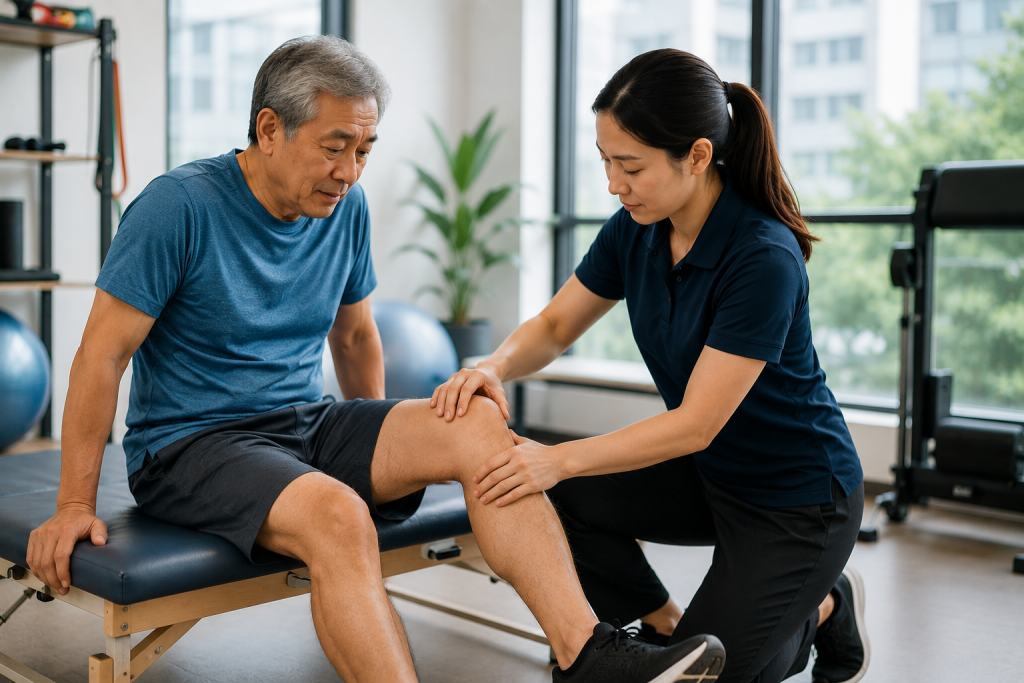
Professional Physiotherapy Solutions for Knee Pain Relief and Recovery
Knee pain is one of the most common musculoskeletal conditions affecting people of all ages. Whether you are an athlete, office worker, active senior, fitness enthusiast, or someone simply trying to maintain an active lifestyle, knee pain can significantly impact your mobility, comfort, and quality of life.
The knee is one of the most important weight-bearing joints in the body. It plays a crucial role in everyday activities such as walking, climbing stairs, standing, sitting, running, exercising, and participating in sports. When knee pain develops, even simple daily movements can become challenging and uncomfortable.
Our knee pain physiotherapy services in Singapore focus on identifying the root cause of your symptoms, reducing pain, restoring mobility, improving strength, and helping you return to your normal activities safely and confidently. Through personalised treatment plans and evidence-based rehabilitation programmes, we help individuals achieve lasting recovery and improved knee function.
Understanding Knee Pain
The knee joint is a complex structure that consists of:
- Bones
- Cartilage
- Ligaments
- Tendons
- Muscles
- Joint capsules
- Soft tissues
These structures work together to provide stability, mobility, and shock absorption during movement.
Knee pain can occur when one or more of these structures become irritated, inflamed, overloaded, injured, or weakened.
Symptoms can range from mild discomfort to severe pain that interferes with daily activities.
Knee pain may develop due to:
- Sports injuries
- Overuse
- Poor movement patterns
- Muscle weakness
- Joint degeneration
- Trauma
- Repetitive strain
- Improper exercise techniques
- Age-related changes
Understanding the cause of knee pain is essential for successful treatment and long-term recovery.
Common Causes of Knee Pain
Overuse Injuries
Repeated stress on the knee can gradually lead to pain and inflammation.
Overuse injuries are common among:
- Runners
- Cyclists
- Gym enthusiasts
- Athletes
- Individuals with physically demanding jobs
Without proper recovery, repetitive movements may place excessive strain on the knee joint and surrounding tissues.
Muscle Imbalances
Weakness in certain muscle groups can affect how forces are distributed through the knee.
Common contributing factors include:
- Weak quadriceps
- Weak hamstrings
- Weak gluteal muscles
- Poor core stability
These imbalances may increase stress on the knee during movement.
Poor Movement Mechanics
Incorrect movement patterns can contribute to ongoing knee pain.
Examples include:
- Poor squatting technique
- Improper landing mechanics
- Excessive knee loading
- Reduced hip control
Physiotherapy helps identify and correct these movement dysfunctions.
Sports Injuries
Sports participation often places high demands on the knee joint.
Common sports-related knee injuries include:
- Ligament injuries
- Tendon injuries
- Cartilage irritation
- Muscle strains
- Joint instability
Appropriate rehabilitation is essential for safe recovery.
Age-Related Changes
As individuals age, natural wear and tear can affect the knee joint.
This may result in:
- Joint stiffness
- Reduced mobility
- Muscle weakness
- Activity-related discomfort
Physiotherapy helps maintain mobility and function despite these changes.
Common Types of Knee Pain
Anterior Knee Pain
Pain at the front of the knee is one of the most common complaints.
Symptoms often occur during:
- Stair climbing
- Squatting
- Running
- Prolonged sitting
Physiotherapy focuses on improving strength, alignment, and movement efficiency.
Medial Knee Pain
Pain on the inner side of the knee may result from:
- Overuse
- Ligament strain
- Muscle imbalances
- Joint irritation
Proper assessment helps determine the underlying cause.
Lateral Knee Pain
Pain on the outer side of the knee can affect athletes and active individuals.
Contributing factors often include:
- Repetitive movements
- Biomechanical issues
- Muscle tightness
Treatment focuses on correcting movement patterns and reducing stress on affected tissues.
Posterior Knee Pain
Pain behind the knee may occur due to:
- Muscle tightness
- Tendon irritation
- Joint dysfunction
A personalised rehabilitation programme can help address contributing factors.
Chronic Knee Pain
Some individuals experience persistent knee pain that lasts for months or years.
Long-term symptoms often involve:
- Muscle weakness
- Reduced flexibility
- Joint stiffness
- Poor movement habits
Comprehensive physiotherapy helps improve function and reduce recurring symptoms.
Symptoms Associated with Knee Pain
Knee pain can present in different ways depending on the underlying condition.
Common symptoms include:
- Pain during walking
- Pain while climbing stairs
- Swelling
- Joint stiffness
- Reduced flexibility
- Difficulty squatting
- Clicking sensations
- Weakness
- Instability
- Limited range of motion
Some individuals experience symptoms only during physical activity, while others may have pain even during rest.
Early intervention often leads to better recovery outcomes.
When Should You Seek Physiotherapy for Knee Pain?
Many people assume knee pain will disappear on its own.
However, untreated knee pain may worsen over time and lead to compensatory movement patterns that affect other parts of the body.
You should consider physiotherapy if:
- Pain persists for more than a few days
- Symptoms repeatedly return
- Mobility is becoming limited
- Exercise becomes difficult
- Walking is uncomfortable
- Daily activities are affected
- Knee stiffness continues to increase
- You feel instability during movement
Seeking treatment early can often reduce recovery time and prevent long-term complications.
Comprehensive Knee Pain Assessment
Successful physiotherapy begins with a detailed assessment.
Our physiotherapists evaluate the factors contributing to your symptoms and develop a treatment plan tailored to your needs.
Medical History Review
Understanding your history helps identify potential contributing factors.
The assessment may include:
- Previous injuries
- Current symptoms
- Activity levels
- Exercise habits
- Occupational demands
- Recovery goals
Movement Assessment
Movement analysis helps identify abnormal mechanics that may contribute to pain.
Assessment may include:
- Walking patterns
- Squatting movements
- Stair climbing
- Balance testing
- Functional activities
Strength Testing
Muscle weakness often contributes to knee pain.
Particular attention is given to:
- Quadriceps
- Hamstrings
- Gluteal muscles
- Calf muscles
- Core muscles
Flexibility Assessment
Restricted flexibility can alter movement patterns and increase knee stress.
Areas commonly assessed include:
- Hamstrings
- Quadriceps
- Hip flexors
- Calves
Functional Evaluation
Functional testing helps determine how knee pain affects everyday activities and physical performance.
Personalised Knee Pain Physiotherapy Treatment
Every patient presents with unique symptoms and goals.
Treatment plans are customised according to:
- Pain severity
- Activity levels
- Functional limitations
- Lifestyle requirements
- Recovery objectives
This personalised approach helps maximise treatment effectiveness.
Pain Relief and Symptom Management
Reducing pain is often the first step in rehabilitation.
Treatment may include:
Manual Therapy
Hands-on techniques can help improve joint mobility and reduce discomfort.
Manual therapy may target:
- Knee joint mobility
- Soft tissue restrictions
- Surrounding muscles
Soft Tissue Therapy
Tight muscles and soft tissue restrictions can contribute to knee pain.
Treatment helps improve:
- Muscle flexibility
- Movement quality
- Comfort during activity
Joint Mobilisation
Restricted joint movement may affect knee function.
Joint mobilisation techniques aim to restore normal motion.
Therapeutic Exercise
Exercise remains one of the most effective approaches for managing knee pain.
Targeted exercises help improve strength, mobility, and function.
Strengthening Programmes for Knee Health
Muscle weakness is a major contributor to many knee conditions.
Strengthening programmes focus on building support around the knee joint.
Quadriceps Strengthening
The quadriceps play an important role in:
- Walking
- Running
- Stair climbing
- Squatting
Improving quadriceps strength often reduces knee stress.
Hamstring Strengthening
Strong hamstrings help support knee stability and movement control.
Gluteal Strengthening
Weak hip muscles can alter knee mechanics and contribute to pain.
Targeted strengthening improves alignment and reduces excessive joint loading.
Core Stability Training
A strong core helps improve overall movement efficiency and lower limb control.
Mobility and Flexibility Rehabilitation
Stiff joints and tight muscles can limit movement and increase strain on the knee.
Physiotherapy programmes often include exercises that improve:
- Knee flexibility
- Hip mobility
- Ankle mobility
- Muscle length
- Joint movement
Improved mobility contributes to better function and reduced discomfort.
Knee Pain Physiotherapy for Active Individuals
Athletes and fitness enthusiasts place significant demands on their knees.
Common causes of knee pain include:
- Running-related injuries
- Jumping sports
- High-intensity training
- Weightlifting
- Direction-changing sports
Sports rehabilitation focuses on:
- Strength development
- Movement correction
- Functional training
- Injury prevention
The goal is to help individuals return safely to sports and exercise.
Knee Pain Physiotherapy for Office Workers
Many office workers experience knee discomfort due to prolonged sitting and inactivity.
Extended sitting can contribute to:
- Joint stiffness
- Muscle weakness
- Reduced flexibility
Physiotherapy programmes often include:
- Mobility exercises
- Strength training
- Movement education
- Workplace recommendations
Knee Pain Physiotherapy for Older Adults
As people age, maintaining knee function becomes increasingly important.
Physiotherapy can help older adults:
- Improve walking ability
- Enhance balance
- Maintain independence
- Reduce stiffness
- Improve muscle strength
A structured rehabilitation programme helps support long-term mobility and quality of life.
Return to Activity and Sports Rehabilitation
Returning to activity too quickly can increase the risk of recurring symptoms.
Physiotherapy helps ensure a safe return through progressive rehabilitation stages.
Early Recovery Phase
Focuses on:
- Pain reduction
- Mobility restoration
- Basic movement improvement
Strength Development Phase
Exercises gradually increase strength and endurance.
Functional Rehabilitation Phase
Activities become more specific to daily demands and sports participation.
Return-to-Sport Phase
Sport-specific drills and conditioning help prepare individuals for safe participation.
Preventing Future Knee Pain
Long-term success depends on addressing the factors that contributed to pain in the first place.
Physiotherapy helps reduce recurrence through:
Movement Education
Learning proper movement techniques can reduce unnecessary knee stress.
Strength Training
Strong muscles help protect the knee during activity.
Flexibility Maintenance
Maintaining mobility supports efficient movement patterns.
Exercise Progression
Gradually increasing training loads helps minimise injury risk.
Functional Conditioning
Improving overall fitness supports long-term joint health.
Benefits of Knee Pain Physiotherapy
Professional physiotherapy offers numerous advantages for individuals experiencing knee pain.
Reduced Pain
Targeted treatment helps alleviate discomfort and improve daily function.
Improved Mobility
Restoring movement allows patients to return to normal activities more comfortably.
Enhanced Strength
Strengthening exercises improve support around the knee joint.
Better Stability
Improved muscle control contributes to greater confidence during movement.
Faster Recovery
Structured rehabilitation promotes efficient recovery.
Reduced Risk of Re-Injury
Addressing underlying weaknesses helps prevent future problems.
Improved Quality of Life
Greater mobility and reduced pain contribute to better overall wellbeing.
Why Choose Physiotherapy for Knee Pain?
Knee pain can affect every aspect of daily life, from walking and exercising to working and enjoying recreational activities.
Physiotherapy provides a comprehensive and non-invasive approach to recovery by focusing on:
- Pain management
- Strength improvement
- Mobility restoration
- Movement correction
- Functional rehabilitation
- Injury prevention
Rather than simply masking symptoms, physiotherapy addresses the root causes of knee pain and supports long-term recovery.
Knee Pain Physiotherapy Singapore
Living with knee pain can be frustrating, limiting, and disruptive to your lifestyle. Fortunately, effective treatment options are available. Through comprehensive assessment, personalised rehabilitation programmes, targeted exercises, and professional guidance, physiotherapy can help you regain mobility, improve strength, and return to the activities you enjoy.
Our knee pain physiotherapy services in Singapore are dedicated to helping individuals recover from pain, restore knee function, and achieve lasting results. Whether you are experiencing sports-related knee pain, activity-related discomfort, age-related mobility challenges, or recurring symptoms, we provide customised treatment plans designed to support your recovery goals.
Take the first step towards healthier knees, improved mobility, and greater confidence in movement with professional knee pain physiotherapy tailored to your needs.