
The best recovery plan is not necessarily the most demanding one. Personalized injury rehabilitation should reflect your injury, movement, goals, and daily routine, then adapt as your abilities change. For an athlete, that means connecting treatment and exercise to the movements required for their sport while matching progress to individual needs. It is understandable to want a clear route back to training, especially when pain or limited mobility also affects work and home life. This guide explains how tailored physiotherapy supports recovery, what to consider when choosing a plan, and how rehabilitation can fit around everyday responsibilities at home or after surgery. You will also learn how assessment, functional goals, and exercise adjustments can support practical progress without treating every injury alike.
Key Takeaways
- Learn which personal factors shape a recovery plan, from your injury and fitness level to the movements you want to regain.
- See how a physiotherapist can fit rehabilitation exercises around everyday routines and adjust them as your abilities change.
- Understand how post-surgical rehabilitation can support safe movement, walking, and more balanced movement patterns.
- Explore how home-based support may make rehabilitation more practical after an injury or surgery.
How Does a Physiotherapist Choose the Best Personalized Therapy Plan for Injury Recovery?
A physiotherapist shapes your plan around your injury, current abilities, and recovery goals. Assessment and regular reviews help match exercises to your stage of recovery and build confidence as your movement improves.
Plans Matched to Recovery Stage and Fitness
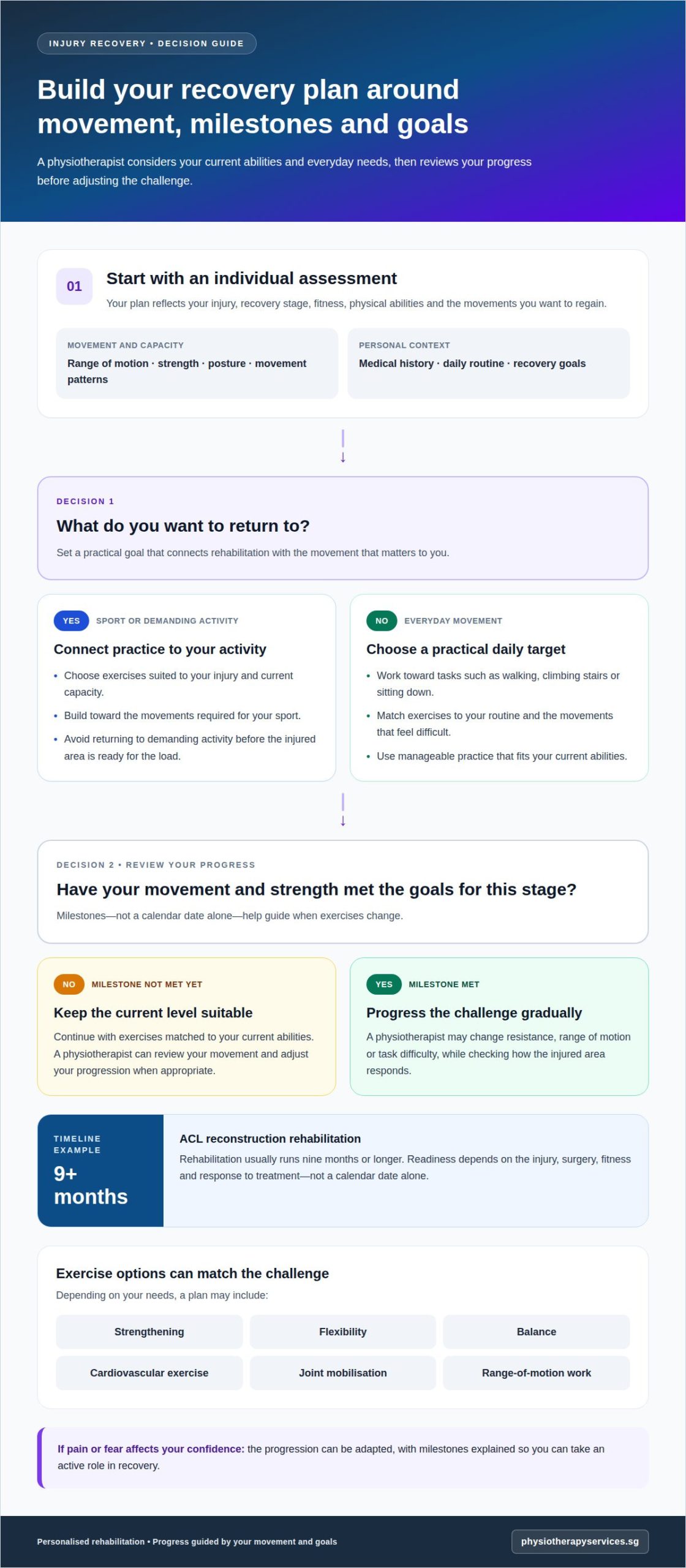
A tailored exercise plan matches activities and challenge levels to your injury, recovery stage, fitness, and physical abilities. During assessment, a physiotherapist considers your range of motion, strength, posture, movement patterns, medical history, and daily routine. For example, an athlete rebuilding strength after a knee injury may need different exercises from someone returning to everyday walking after surgery. Starting from your current abilities helps make practice relevant and manageable.
Milestones and Recovery Timelines
Milestone-based progression means changing exercises when your movement and strength meet the goals for that stage. A physiotherapist may set practical targets, such as climbing stairs more comfortably or improving strength before you add a more demanding task. Recovery timelines vary with the injury, surgery, fitness, and response to treatment. For example, rehabilitation after ACL reconstruction usually runs nine months or longer, so a calendar date alone cannot determine readiness.
Maintaining Training During Injury Recovery
You may be able to continue training in a modified form when a physiotherapist selects activities suited to your injury and current capacity. For example, a runner with a leg injury may need to pause running while working on appropriate strength, flexibility, balance, or cardiovascular exercises. Guidance helps you avoid loading the injured area beyond the plan while maintaining suitable routines. Clear targets and gradual adjustments can support motivation, confidence, and independence during recovery.
Plan Assessment, Options, and Return-to-Activity Risks
An individualized plan begins with a clinical assessment of your condition, movement, strength, medical history, and goals. It can address sports injuries, back or shoulder pain, knee problems, and recovery after surgery. Depending on your needs, physiotherapy may include strengthening, flexibility, balance, cardiovascular exercises, or joint mobilisation. These choices tailor the plan to your movement challenges and daily demands.
Returning to sport or demanding activity too soon can expose an injured area to more load than it is ready for. An unsuitable plan may also overlook weaknesses or movement patterns that need attention. If pain or fear affects your confidence, a physiotherapist can adapt your progression and explain each milestone. This helps you understand your recovery and take a more active role in it.
How Physiotherapists Help Integrate Rehabilitation Exercises into Everyday Routines
A physiotherapist connects exercises with your lifestyle, available time, and movement goals. This makes practice more practical, while reviews help adjust activities as your progress changes.
Flexible Home Exercise Schedules
A flexible home schedule can fit prescribed exercises around regular activities and responsibilities. For example, a physiotherapist might help you plan a short mobility session before work and strength exercises at a more suitable time. Your schedule should reflect your routine and recovery needs rather than add unnecessary pressure. A clear plan can make consistent practice easier.
You can discuss which parts of the day feel manageable and where movement is difficult. A physiotherapist may connect a suitable exercise with an existing routine, such as practising a balance movement beside a stable kitchen counter. This keeps the activity purposeful and helps you understand how each exercise supports daily function.
Mobility and Range-of-Motion Work
Mobility and range-of-motion exercises help a joint move through the motions needed for everyday tasks. After shoulder surgery, for instance, gentle movements may help restore flexibility before more active strengthening begins. Physiotherapists select movements according to the affected area and stage of recovery. This can address stiffness while keeping exercises relevant to reaching, dressing, or other daily activities.
For a stiff knee, a physiotherapist may prescribe controlled bending and straightening exercises. They can show you how to perform each movement and adjust it as your ability changes. These exercises have a practical purpose: they link joint movement with tasks such as sitting down or walking around your home.
Progressive adjustments keep exercises aligned with changes in strength and movement. A physiotherapist may modify resistance, range, or task difficulty as you improve, while monitoring how the injured area responds. For example, a balance exercise may progress from supported standing to a more challenging position when appropriate. Regular clinical reviews help identify when a change is useful and when the current level remains suitable.
AI-supported tools may help organise exercise information, but recorded progress needs clinical interpretation. A physiotherapist can use your reported symptoms, movement, and exercise response to adjust the plan and address movement patterns that may increase strain. If you need support fitting guided exercises into your home routine, home physiotherapy can bring rehabilitation into your familiar surroundings.
What Is Post-Surgical Rehabilitation?
Post-surgical rehabilitation is a structured programme to restore strength and function after an operation. Physiotherapy links movement practice with daily tasks, helping you regain mobility and perform activities safely.
Movement Symmetry and Gait Training
Gait training practises walking mechanics, while movement symmetry compares how each side contributes to a task. After knee or hip surgery, a physiotherapist may observe your steps, balance, and weight shift. Force plate testing can reveal a 20% difference in leg force, giving a concrete example of an asymmetry to address. More even movement can make walking and standing feel more controlled.
Functional Training for Daily Activities
Functional training uses movements that resemble activities you need to perform at home or work. For example, repeated sit-to-stand practice can prepare you to get up from a chair, while step practice can relate to using stairs. A physiotherapist can adapt these tasks to your abilities and stage of recovery after surgery. Practising meaningful movements connects therapy with greater independence in daily routines.
Strength and Stability Training
Strength and stability exercises target muscles that may weaken after surgery or while you protect an injured area. A physiotherapist can progress from controlled movements to tasks requiring more balance and coordination. After knee surgery, for example, guided bending and straightening can help maintain joint movement, while strengthening supports stability. Exercise selection and progression should reflect your response and the functional movements you are working to regain.
Medical Clearance and Rehabilitation Approaches
Before beginning personal training for rehabilitation after surgery, obtain clearance from your doctor, especially when surgery or another medical condition affects exercise choices. Physiotherapy focuses on movement, function, and therapeutic exercise; sports medicine addresses medical assessment and sports-related injury care. Multidisciplinary rehabilitation brings different professional roles together around broader recovery needs. The right approach depends on whether your main goal is daily mobility, post-surgical function, or a safe return to sport.
Home rehabilitation after injury or surgery
Home rehabilitation brings structured movement practice into the place where you manage daily activities. A physiotherapist can tailor treatment to your injury, recovery after surgery, home environment, and practical goals, such as walking safely between rooms or standing to prepare a meal.
A home assessment can connect exercises with specific challenges. After hip surgery, for example, a programme may address difficulty standing for long periods or walking around your home. Following spinal surgery, core-stabilisation exercises may support safer movement and help reduce back strain. Your physiotherapist can also explain posture, movement techniques, self-care, and activity changes suited to your recovery.
This approach can be helpful when travelling feels difficult or uncomfortable after surgery, injury, or reduced mobility. Practising at home lets you fit prescribed exercises around your timetable and other responsibilities. Familiar surroundings may also ease anxiety and support participation. People practising at home may report fewer missed sessions and a smoother recovery, although the plan still needs to match their condition and abilities.
For an athlete recovering from a sports injury, home exercises can complement guided sports rehabilitation by maintaining suitable strength and mobility work. A physiotherapist can adapt the plan as your abilities change, modifying movements or increasing intensity when appropriate. An older adult rebuilding mobility might instead focus on balance and daily tasks. The right emphasis depends on your injury, recovery goals, and the activities that matter to you.
Home rehabilitation is not simply a printed exercise list. It combines tailored guidance, movement practice, and education that helps you understand how to manage daily activities during recovery. If getting to a clinic is difficult, arrange physiotherapy support at home to discuss a plan suited to your needs.
Physiotherapy Services | Find a Physiotherapist: Sports Injury Rehabilitation
Physiotherapy Services | Find a Physiotherapist provides Sports Injury Rehabilitation for athletes returning to training or managing movement limitations after an injury. Physiotherapists tailor treatment to your condition, lifestyle, and recovery goals, then adapt exercises as your abilities change. If surgery or reduced mobility makes travel difficult, Post-Surgery and Mobility Rehabilitation or Home Physiotherapy may support rehabilitation in a familiar setting. Pain Management and Physiotherapy Treatment can also address discomfort that affects daily movement. These services may suit you when you need structured guidance, practical exercises, and support connecting recovery with everyday or sporting activities. The next step is to discuss your injury, current challenges, and goals with the team. Contact a physiotherapy provider to talk about your rehabilitation needs.
Take Your Next Step Towards Confident Movement
Your next step can begin with a conversation about what you need to do comfortably, whether that means returning to sport, managing daily movement, or rebuilding independence after surgery. Personalized injury rehabilitation works best when your goals, current abilities, and everyday circumstances shape your care. Share what feels difficult and which progress would matter most in your life.
Experienced physiotherapists across Singapore create evidence-based plans tailored to each person’s condition, lifestyle, and recovery goals. Support includes Sports Injury Rehabilitation, Post-Surgery and Mobility Rehabilitation, and Pain Management and Physiotherapy Treatment. Your care team can help you understand your rehabilitation and work steadily towards meaningful movement goals.
When you’re ready to discuss your needs, contact Singapore Physio Therapy Services | Find Physiotherapist Singapore. A thoughtful next step can help you move forward with greater clarity and confidence.
Frequently Asked Questions
What Is Personalized Physical Therapy for Athletes?
It is physiotherapy shaped around an athlete’s injury, sport, and return-to-play demands. A physiotherapist may consider whether your sport requires quick changes of direction, overhead movement, or repeated jumping. For example, rehabilitation for a court-sport player may build towards controlled side-to-side movement before full training. This sport-specific focus connects exercises with the movements you need to perform.
What is personalized injury rehabilitation?
Personalized injury rehabilitation is a recovery plan adapted to your condition, physical abilities, and goals. It can address more than the injured area alone. For example, a physiotherapist may consider how discomfort affects your commute, sleep position, or ability to carry groceries. This context makes treatment relevant to the activities you want to resume and the challenges you face day to day.
Which specialists provide personalized injury rehabilitation in the United States?
Physiotherapists assess movement and guide rehabilitation exercises across the United States. If you are recovering after an operation, your doctor or surgeon can advise on medical restrictions, while your physiotherapist focuses on physical function and exercise progression. For a sports injury, physiotherapy can address the movement demands of your activity. The professionals involved depend on your condition and the support you need during recovery.
What are the steps and typical timeline for injury rehabilitation?
Rehabilitation generally moves from assessment to a tailored plan, guided exercise, progress reviews, and a gradual return to chosen activities. The pace depends on the injury, your starting abilities, and how your body responds. For example, someone aiming to return to recreational running may work towards comfortable walking and improved strength before adding running demands. A physiotherapist reviews progress to guide each transition.
What should you look for when choosing a licensed, reputable injury rehabilitation provider in the United States?
Look for a service where experienced physiotherapists assess your condition, explain treatment choices, and tailor plans to your goals and lifestyle. Physiotherapy services across the United States use evidence-based treatments and individualized plans. A useful first conversation should clarify how your daily activities or sport relate to rehabilitation, how progress is reviewed, and how exercises can be adapted to your recovery needs.