
Physiotherapy for limited mobility can help improve balance, build strength and make everyday movement more manageable. For older adults concerned about falls, an assessment can identify areas of weakness, stiffness or reduced control and guide exercises to address them.
If you’re supporting a parent or managing mobility changes yourself, it’s understandable to want safe, practical care; physiotherapy may also ease stiffness and support confidence, with the approach shaped by your needs, abilities and recovery goals. This article explains how assessment and rehabilitation can support balance, how home, community and remote options may suit different circumstances, and what to consider when choosing care in Singapore.
Key Takeaways
- An individualized assessment can identify how changes in strength, joint function and balance affect daily movement.
- Home, community and remote rehabilitation offer different ways to practise functional movement and build confidence.
- Manual therapy may be combined with exercise to address stiffness, discomfort and restricted range of motion.
- A tailored treatment plan can focus on practical goals such as walking, comfort and greater independence.
Can physiotherapy help to improve balance and prevent falls for frail elderly parents?
Age-related changes can affect walking, standing and confidence with everyday movement. Physiotherapy assesses these changes and tailors treatment to each person’s abilities and daily goals.
Ageing and Changes in Mobility
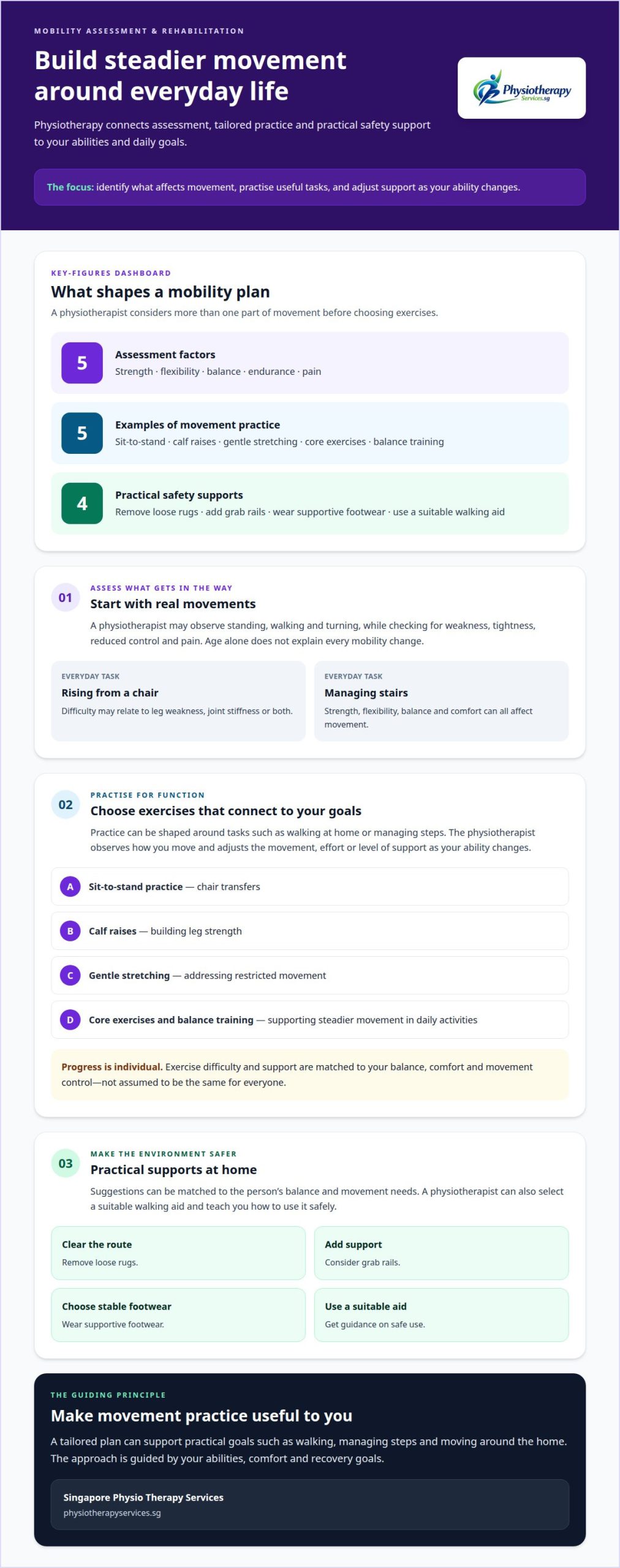
Ageing may reduce muscle strength, joint flexibility and balance, making tasks such as rising from a chair or climbing stairs more difficult. Pain or stiffness can also change walking patterns. A physiotherapist considers how these factors affect practical tasks, rather than treating age as the only explanation for reduced mobility.
For example, difficulty standing may relate to leg weakness, joint stiffness or both. Identifying the main barriers helps shape rehabilitation around maintaining independence and moving safely.
Physiotherapy Exercises for Strength, Flexibility, and Balance
A physiotherapist selects exercises after considering strength, flexibility, balance, endurance and pain. A plan might include sit-to-stand practice for chair transfers, calf raises to build leg strength, and gentle stretching for restricted movement. Core exercises and balance training can support steadier movement during daily activities.
The physiotherapist guides progression by observing how you perform each task. They may adjust the movement, effort or level of support as your ability changes, keeping exercises relevant to goals such as walking around the home or managing steps. This builds functional strength without assuming one routine suits everyone.
Mobility Assessment and Exercise Precautions
During an appointment, the physiotherapist observes movements such as standing, walking and turning, and assesses areas of weakness, tightness or reduced control. They also consider pain and your current abilities when planning exercises.
To manage risks, the physiotherapist matches exercise difficulty and support to your balance, comfort and movement control. They can suggest removing loose rugs, adding grab rails and wearing supportive footwear. They can also select a suitable walking aid and teach you how to use it safely.
Community rehabilitation, home therapy and tele-rehabilitation
Community rehabilitation can take place at a centre, at home or through remote sessions. The setting should match the movement challenges you need to practise. During a home visit, a physiotherapist can observe transfers between bed, chair and bathroom, then adapt practice to the actual layout. For adults who find leaving home difficult, home visits bring rehabilitation into familiar surroundings and reduce travel-related stress.
Remote sessions can provide guided movement practice and education when travelling is difficult. A physiotherapist can review a task such as rising from a chair on video, explain techniques and adapt guidance to your performance. In-person care is more suitable when hands-on assessment or support is needed. Regular contact with family and friends can support participation in rehabilitation and help build confidence.
After a stroke or acquired brain injury, rehabilitation may include gait training, balance exercises and task-specific practice to relearn movement patterns. For example, a session might focus on coordinating steps while turning or reaching for an everyday object. With your agreement, carers can learn to support practice safely and encourage independence between sessions. Physiotherapists may coordinate care with occupational therapists, speech pathologists and exercise physiologists when different needs affect recovery.
After surgery, rehabilitation can focus on rebuilding strength, flexibility and function for daily activities. Following Botox treatment, a physiotherapist can assess movement and tailor rehabilitation to your current function and agreed clinical guidance. In both situations, progress is guided by your abilities and goals, not a fixed schedule. A clear plan helps carers understand which tasks to support and how to encourage confidence without taking over.
Manual therapy for muscle tension and stiffness
Manual therapy can address muscle tension and stiffness that restrict a joint’s range of motion. A physiotherapist first identifies movements causing discomfort, such as turning your neck or reaching overhead. Gentle hands-on techniques can ease soft-tissue discomfort and prepare your body for movement. Active movement practice can then help you use that range in daily activities.
For example, a stiff shoulder may make dressing or reaching difficult. Treatment can focus on comfortable shoulder movement, followed by tailored exercises to build control and strength. The physiotherapist adjusts pressure and movement to your comfort and response. This approach connects symptom relief with functional training, rather than treating manual therapy as a stand-alone solution.
For someone who is bed-ridden, home therapy can adapt treatment to their position, energy and movement ability. A physiotherapist may guide ankle circles or ankle pumps to keep the feet and ankles supple during long periods of sitting or lying down. These movements may also help address swelling. The physiotherapist demonstrates suitable techniques and adjusts the range to the person’s ability.
Before hands-on treatment, the physiotherapist considers your symptoms, movement limits and relevant health history. This helps determine which areas to treat and which movements need gentler handling. Clear guidance can also help carers support comfortable positioning during a home visit. If stiffness affects a practical task, such as rolling in bed, treatment can pair gentle movement with exercise to support comfort and function. The plan is tailored as movement and tolerance change.
Mobile physiotherapy for people with limited mobility
A home assessment shows how mobility challenges affect real tasks, not just clinic exercises. The physiotherapist discusses your health history, current symptoms and personal goals, then observes relevant movements. These might include getting out of bed, standing from a chair or walking between rooms. This connects treatment to your actual environment and priorities.
The plan addresses specific barriers to function. If walking feels unsteady, the physiotherapist can assess your gait and practise safe movement with a walking aid. If a doorway threshold or a short flight of steps is difficult, they can guide practice in that setting. Outdoor terrain can also be included for people using walking aids, so rehabilitation reflects the routes they need to manage.
Comfort matters alongside movement. The physiotherapist considers pain, stiffness, fatigue and the support available during each task. Treatment might combine targeted exercises, movement practice and guidance on using an aid. Difficulty is adjusted according to how you move and respond, rather than following a fixed schedule. A family member or carer can learn to support agreed activities safely.
Progress is reviewed against practical goals, such as transferring with less assistance or walking more steadily around the home. The physiotherapist adjusts your personalized treatment plan as ability, comfort and movement change. For someone who rarely leaves home, this makes physiotherapy for limited mobility more relevant to daily routines. Home physiotherapy brings assessment and rehabilitation to the places where function matters most, with treatment focused on individual needs and safe progress.
Physiotherapy programs for people with disabilities can combine personalized exercise, manual therapy and self-management education. If you have reduced mobility, a physiotherapist can assess your needs and guide a suitable exercise plan.
Singapore Physio Therapy Services | Find Physiotherapist Singapore: Post-Surgery and Mobility Rehabilitation
Singapore Physio Therapy Services | Find Physiotherapist Singapore provides Post-Surgery and Mobility Rehabilitation for people rebuilding movement after surgery, injury or reduced mobility. Its qualified physiotherapists use evidence-based treatment tailored to your condition, current function and recovery goals. An assessment can help identify whether pain, weakness or limited walking is restricting daily activities.
For post-surgical rehabilitation, the plan can address strength, flexibility and function through practical tasks such as standing, dressing or walking indoors. The physiotherapist considers your recovery stage, symptoms and movement before selecting exercises and adapting them as your ability changes. This makes each milestone relevant to what you need to do, rather than relying on a fixed routine.
Home Physiotherapy Singapore can help when travel is difficult or your movement needs assessment in familiar surroundings. A physiotherapist can observe the route between bed and bathroom, assess a transfer or practise walking with an aid. Pain Management and Physiotherapy Treatment can address discomfort that limits activity, while Back Pain Physiotherapy Singapore supports people whose symptoms restrict walking, standing or other daily tasks.
If you’re regaining mobility after surgery, managing persistent pain or struggling to move safely at home, rehabilitation can connect clinical guidance with your daily routine. Treatment may include walking practice, mobility exercises and pain-focused care as appropriate. Discuss your current limitations, previous treatment and functional goals with a physiotherapist so your plan reflects your needs. Treatment and progress are guided by assessment and your response.
Contact Singapore Physio Therapy Services | Find Physiotherapist Singapore to discuss your rehabilitation needs.
Frequently Asked Questions
How often should physiotherapy sessions be conducted?
Session frequency depends on your goals, current function and response to treatment. Some people may benefit from sessions multiple times per week, while others need a different pace. A physiotherapist considers how you manage between appointments, whether symptoms settle and how consistently you can take part. These factors help shape a schedule that supports rehabilitation without assuming one routine fits everyone.
Is physiotherapy suitable for stroke patients?
Yes. Physiotherapy can support recovery after a stroke by assessing which movements and activities have changed. The physiotherapist can then set priorities around the person’s abilities and daily needs, adapting the plan as function changes. For example, treatment may address difficulty coordinating one side of the body during a familiar task. The approach is individualized and can form part of broader rehabilitation.
What causes limited mobility, and when should someone see a physiotherapist?
Limited mobility may follow an injury, fall, operation or disease. It can also involve joint stiffness, pain or reduced movement control. Consider physiotherapy when a change makes everyday routines harder, such as getting dressed or moving safely between rooms. An assessment can help identify restricted movements and whether discomfort, weakness or coordination difficulties affect your function.
How can physiotherapy improve mobility and independence?
Physiotherapy can help you work towards activities that matter to you, while recognizing that independence does not always mean doing everything without assistance. For one person, it may mean completing a household task with less help; for another, moving confidently with an appropriate aid. Goals are set around your needs, and treatment can adapt as your ability and priorities change.
What physiotherapy treatments and exercises help with limited mobility?
The right exercises depend on your abilities and movement goals. A physiotherapist may consider seated leg lifts or seated marching when standing exercises are not suitable, or choose other options based on your control and comfort. These examples are not a universal routine. The physiotherapist assesses how you perform each movement and adapts the exercise to your rehabilitation needs.
How often and for how long is physiotherapy usually needed to improve mobility?
The overall duration depends on what is limiting movement, your starting ability and your goals. Recovery after surgery may follow different milestones from rehabilitation for a long-term condition. Your physiotherapist reviews changes in function and your response to treatment, then adjusts the plan. Progress is judged against meaningful activities, not a fixed number of appointments.