
Early mobility exercises are often done in short sessions throughout the day, with the frequency and movements tailored to your surgery, health, and progress. If you’re wondering how to improve mobility after surgery, a steady, clinically guided routine can help you rebuild movement without pushing your body beyond what it is ready for.
Pain, swelling, fatigue, and restrictions after surgery can all affect how easily you move, so the same routine won’t suit everyone. This article explains how exercise frequency may be set, what can limit movement, and how post-surgical rehabilitation can support everyday activities and mobility.
Key Takeaways
- Early mobility sessions are usually brief and repeated through the day, with frequency adjusted to your surgery and recovery progress.
- Pain, swelling, stiffness, and fatigue can restrict movement, so rehabilitation should account for how your body responds.
- A physiotherapist can guide gradual exercise progression and tailor movement goals to everyday activities.
- Ongoing strengthening and balance work can help rebuild function and support steadier movement over time.
1. Post-surgery stiffness, pain, and limited mobility
Stiffness, pain, and restricted movement can develop when inflammation around a surgical site causes swelling, tightness, and tenderness. These changes may limit flexibility and make everyday actions, such as standing from a chair or lifting your arm, difficult. Recovery varies by procedure: knee surgery can affect bending and walking, while shoulder surgery may limit reaching and dressing. The extent of the operation and your overall health also influence how movement returns.
If your healthcare team has cleared you to walk, they may recommend timing a first walk for about 30 to 45 minutes after pain medication takes effect. This is one possible approach, and the timing should depend on your procedure and care-team advice. A physiotherapist can help pace early movement around your comfort, balance, and surgical restrictions. If you feel dizzy or unsteady, pause and tell your care team before trying again.
Pain management works best when you discuss symptoms and medication with your healthcare professionals. After knee replacement, your healthcare team can shape a pain plan around your individual needs. Options may include prescribed medication, over-the-counter pain relievers, ice, and leg elevation. Applying ice for 15 to 20 minutes several times daily may help manage swelling, but the duration and frequency should depend on your procedure and your care team’s advice. Heat or other treatments may also be considered to ease discomfort and support movement, depending on your procedure and recovery.
A physiotherapist selects an assistive device by assessing your balance, strength, walking pattern, and movement limits. For instance, a walker may offer more support than crutches if you feel unsteady when standing or walking. The right fit and safe technique matter, so your physiotherapist can guide you in using the device and adjust the support as your mobility changes.
Follow your surgical team’s instructions before increasing activity. If pain worsens, swelling does not ease with rest and ice, or exercise causes discomfort, stop and seek medical guidance. A physiotherapist can review your symptoms and movement, then adapt your rehabilitation plan to help you return to daily activities safely.
How a physiotherapist determines how often you should do early mobility exercises
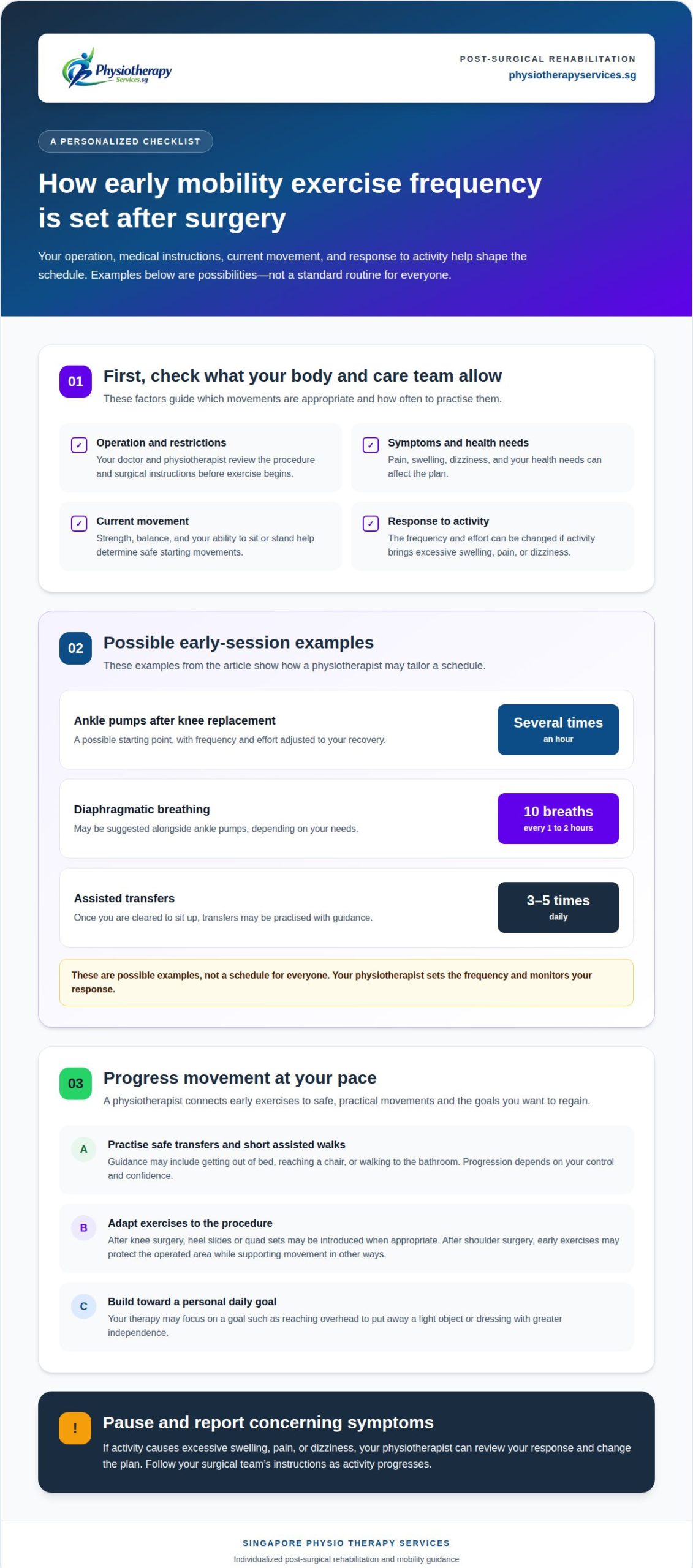
Your exercise schedule depends on the operation, medical instructions, current movement, and how you respond to activity. Before exercise begins, your doctor and physiotherapist review surgical restrictions, symptoms, and health needs. To understand how to improve mobility after surgery, they assess which movements are appropriate and how your body responds. After knee replacement, for example, a physiotherapist may recommend ankle pumps several times an hour as a possible starting point, then tailor the frequency and effort to your recovery. This is an example, not a standard schedule for everyone.
Breathing exercises and gentle movement may form part of early therapy. Depending on your needs, a physiotherapist might suggest 10 diaphragmatic breaths every 1 to 2 hours alongside ankle pumps to encourage circulation. Once you’re cleared to sit up, assisted transfers might be practised three to five times daily. These are possible examples, not a schedule for everyone; your physiotherapist sets the frequency and monitors your response, changing the plan if activity brings excessive swelling, pain, or dizziness.
To get out of bed and walk safely, your physiotherapist assesses your strength, balance, and ability to sit or stand. They can guide transfers, choose suitable support, and supervise short assisted walks, progressing as your control and confidence improve. This practical assessment connects exercises with activities such as reaching a chair or walking to the bathroom, helping you build a clearer path to improve mobility after surgery.
Range-of-motion and strengthening exercises also depend on the operation. After knee surgery, a physiotherapist may introduce heel slides or quad sets when appropriate, then adjust repetitions and movement range as your function develops. After shoulder surgery, early exercises may protect the operated area while supporting movement in other ways. Resistance and weight-bearing activities progress only when your surgical instructions and physical response allow.
Your therapy can also focus on a personal goal, such as reaching overhead to put away a light object or dressing with greater independence. This connects exercise selection with the function you want to regain. A physiotherapist can shape post-surgical rehabilitation around those priorities and adjust the plan as your needs evolve.
3. Potential effects of not getting post-operative physical therapy
Without structured rehabilitation, it can be harder to regain joint movement and everyday function after surgery. Muscle strength can start declining within 48 hours of inactivity, while stiffness and reduced movement may make tasks such as standing, dressing, or climbing stairs more difficult. Healing may also take longer when movement and function are not progressively addressed.
The right time to begin depends on the operation and your recovery needs. Physiotherapy may start within a few hours to several days after surgery. A physiotherapist considers the procedure, surgical instructions, pain, swelling, and your health before setting goals. Your personalized treatment plan can then progress from safe transfers and basic movement to strengthening and daily activities.
Rehabilitation also addresses tissue mobility as the surgical site heals. A physiotherapist can guide movement and treatment intended to keep scar tissue flexible, which may ease related discomfort. If lower-body surgery affects your balance, guided weight shifts and stability exercises can help you practise control while standing and walking. Better balance supports safer movement and may help reduce fall risk.
Physical therapy may also relate to pain treatment decisions. A 2020 study published in Pain Reports found an almost 90% decreased probability of opioid prescriptions among patients with musculoskeletal pain who received physical therapy first. This finding concerns that patient group; it does not mean therapy replaces prescribed medication or applies to every post-surgical patient. Discuss pain and medication questions with your healthcare professionals.
Skipping or delaying prescribed rehabilitation can leave strength, range of motion, and functional movement less developed than before surgery. If returning to activities feels difficult or your progress stalls, speak with your surgical team or physiotherapist. They can review your symptoms, identify barriers, and adjust your rehabilitation plan gradually while accounting for healing and surgical precautions.
4. Long-term mobility and injury prevention
Long-term mobility depends on rebuilding strength, control, and confidence in movement after the initial healing phase. Progressive strengthening exercises help muscles support the operated area during tasks such as climbing stairs, carrying groceries, or rising from a chair. A physiotherapist can adjust resistance and movement range as your function changes, rather than advancing every exercise at the same pace.
Balance rehabilitation can combine stability practice, weight shifts, and resistance work to improve coordination. After knee or hip replacement, targeted lower-body exercises can support balance and more even weight distribution. Proprioception exercises also train awareness of body position, which matters when stepping off a kerb or turning while walking. These activities should match your surgical recovery and current control.
Flexibility work can help address stiffness as movement returns. As an individualized example, static stretches may be held for 15-30 seconds, depending on your procedure and recovery, to support joint range of motion and flexibility. A therapist can select positions that suit your procedure and avoid placing unnecessary strain on healing tissue. For example, a stretch may be modified if reaching or bending still feels restricted.
Returning to sport or more demanding activity calls for gradual progression. After knee replacement, avoid high-impact activities and heavy lifting until your healthcare provider clears them. Running, jumping, and heavy weightlifting can place demands beyond the current capacity of healing muscles and joints. Your activity goals, movement mechanics, and symptoms help guide the next safe step.
Regular, tailored strengthening and balance practice can help preserve everyday function and reduce the risk of recurrent injuries. Keep track of which activities feel controlled, such as walking on level ground before trying uneven paths. If stiffness or movement difficulty increases, have your rehabilitation plan reviewed. Get guidance on long-term mobility rehabilitation to build strength, balance, and confidence around your daily goals.
Singapore Physio Therapy Services | Find Physiotherapist Singapore: Post-Surgery and Mobility Rehabilitation
Singapore Physio Therapy Services | Find Physiotherapist Singapore provides Post-Surgery and Mobility Rehabilitation to support your return to everyday movement. A physiotherapist assesses your surgery, current mobility, symptoms, and goals, then tailors a personalized treatment plan to your needs.
Consider post-surgical rehabilitation when pain, stiffness, or difficulty with daily activities makes it hard to progress, or when you need guidance adapting exercises safely. Treatment may focus on movement, strength, balance, and practical tasks such as standing, walking, or reaching. If pain also needs attention, Pain Management and Physiotherapy Treatment can form part of your care. Home Physiotherapy Singapore offers rehabilitation at home when that better suits your circumstances.
Singapore Physio Therapy Services | Find Physiotherapist Singapore uses evidence-based treatment to guide your rehabilitation and adapt it as your function changes. Contact Singapore Physio Therapy Services | Find Physiotherapist Singapore to discuss your post-surgery mobility needs.
Build a routine around the life you want to return to
Recovery is an opportunity to shape movement around what matters to you, not just the demands of rehabilitation. As your needs change, everyday goals such as managing household tasks, returning to sport, or moving more independently can guide the next stage. A physiotherapist can connect your recovery plan with those priorities, keeping progress relevant beyond the clinic.
Learning how to improve mobility after surgery also means recognising when your routine needs to change. If progress feels uncertain or pain continues to affect daily function, professional guidance can help you identify a suitable next step. Singapore Physio Therapy Services | Find Physiotherapist Singapore’s qualified physiotherapists provide evidence-based care for post-surgical rehabilitation, sports injury rehabilitation, and pain management.
Contact Singapore Physio Therapy Services | Find Physiotherapist Singapore to discuss your mobility goals. With a plan shaped around your needs, you can keep working towards steadier, more confident movement.
Frequently Asked Questions
How does a physiotherapist determine how many times a day you should do early mobility exercises?
Your physiotherapist bases exercise frequency on your operation, movement quality, symptoms, and response between sessions. They may observe whether you can complete a movement with control, then adjust how often you practise it. For instance, if fatigue affects your form later in a session, they can modify the routine or allow more recovery time. Follow the plan agreed with your surgical team.
What are the red flags that mean I should call my surgeon?
Contact your surgeon about worsening pain, excessive swelling that does not ease with rest and ice, or a fever above 101°F after surgery. Stop an exercise and seek medical guidance if it causes pain, swelling, or discomfort. Also seek professional help if you cannot manage daily activities despite following your rehabilitation programme. These changes warrant advice rather than pushing through your routine.
Why Is It Important To Strengthen Joints After Surgery?
Strengthening the muscles around an operated joint helps you control movement during daily tasks. Stronger thigh muscles, for example, support actions such as rising from a chair, while shoulder muscle control helps with reaching. A physiotherapist selects exercises that suit your procedure and current function, then progresses them as appropriate. This targeted work helps rebuild capacity for practical activities, not just exercise.
Why is day 3 the hardest after surgery?
Pain often peaks around day 2 to 3 after surgery as regional nerve blocks and the initial effects of anaesthesia wear off. This timing can make movement feel more difficult, particularly if swelling or tenderness is also present. The experience varies with the procedure and individual recovery. Keep your healthcare team informed about changes in pain so they can guide your pain management plan.
Why is it hard to walk after surgery?
Walking may feel difficult because pain, swelling, stiffness, and reduced strength can affect how your leg bears weight and controls each step. You may also feel less steady after a period of rest. The type of surgery matters: a knee procedure can limit bending, while another operation may affect posture or balance. Your care team can identify what is limiting your walking.
How soon can a physiotherapist guide you to start moving after surgery?
Depending on the operation and its extent, physiotherapy may begin within a few hours to several days after the procedure. Early guidance might focus on breathing, safe position changes, or movements that follow your surgical restrictions. Your physiotherapist coordinates activity with your medical instructions and current condition, then adjusts the approach as recovery progresses. Start only when your care team has cleared the activity.