
Pain management physiotherapy in Singapore can combine an individual assessment, targeted treatment and preventive exercises to help ease pain and support movement, independence and everyday activities. Pain is generally considered chronic when it has lasted three months or longer, and a physiotherapist can assess how it affects your strength, mobility and daily tasks. Your treatment plan can then be shaped around your condition, recovery needs and practical goals, whether you’re managing back pain, returning to sport or rebuilding mobility after surgery.
Key Takeaways
- Understand how physiotherapy can fit into a broader approach to persistent pain and support movement and function.
- Learn why neck pain exercises should be selected and adapted to your symptoms and mobility needs.
- See what a specialist assessment can consider when shaping an individualized plan of care.
- Explore how treatment goals can connect to everyday activities, confidence and independence.
What is Pain Management and Physiotherapy?
Pain management physiotherapy in Singapore uses assessment, movement and education to address pain and support everyday function. Care can be tailored to the difference between a recent injury and persistent chronic pain.
Acute and Chronic Pain Care
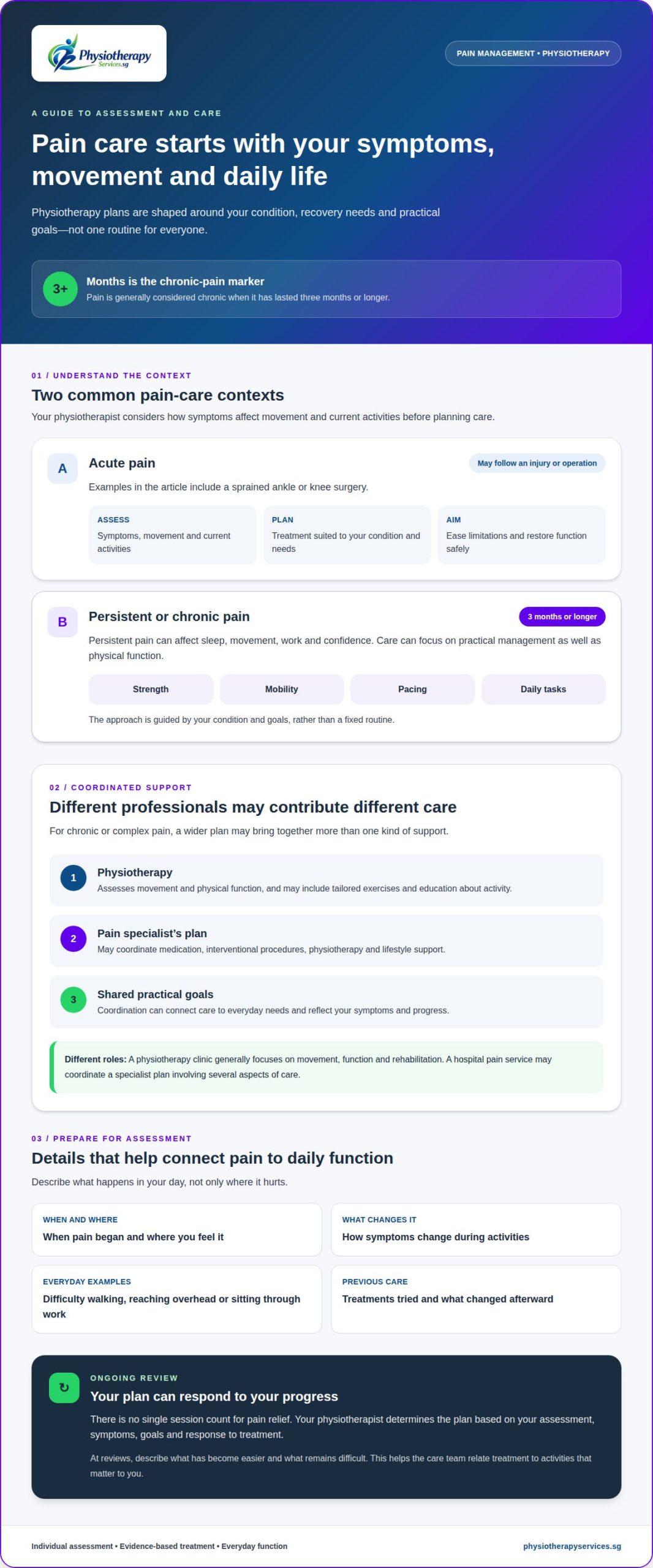
Acute pain may follow an injury or operation, such as a sprained ankle or knee surgery. A physiotherapist assesses your symptoms, movement and current activities before planning treatment, with the aim of easing limitations and restoring function safely. Chronic pain is generally described as pain lasting three months or longer. For persistent symptoms, care can focus on strength, mobility, pacing and practical ways to manage daily tasks. Your condition and goals guide the approach.
Multidisciplinary Chronic Pain Management
Chronic pain can affect sleep, movement, work and confidence, so care may involve more than one kind of support. A pain specialist’s plan may include medication, interventional procedures, physiotherapy and lifestyle support. Physiotherapy contributes movement assessment, tailored exercises and education about activity. When comparing care options, look for coordination between the professionals involved and goals linked to your everyday needs. The plan should reflect your symptoms and progress, rather than rely on one routine for every person.
When comparing physiotherapy clinics, look for an individual assessment, evidence-based treatment and a plan linked to your goals. Ask how the physiotherapist will assess your movement, adapt exercises and review changes in activities such as walking or lifting.
The Singapore physiotherapy pathway described requires a doctor’s referral and an appointment. For public-hospital care, arrange a referral rather than assuming you can attend without one.
Insurance and MediSave coverage depend on your policy terms and applicable treatment eligibility. Review the relevant terms for your specific treatment before planning payment.
There is no single session count for pain relief. Your physiotherapist determines the plan based on your assessment, symptoms, goals and response to treatment.
Risks depend on your condition and the treatment selected. Your physiotherapist assesses your symptoms and movement, then adjusts the plan if an activity causes concern.
Neck pain solutions and preventive exercises
Neck pain can make it harder to turn your head, work at a screen or drive. Physiotherapy uses assessment, exercise and education to address contributing factors and support movement.
Hands-On Therapy and Graded Exercise
During an appointment, a physiotherapist assesses your neck movement, symptoms and activities that aggravate discomfort. Depending on the findings and your goals, hands-on therapy may be used alongside exercises. A graded programme builds activity in manageable stages, such as progressing from comfortable neck movement to tasks requiring more control. Ask how progress will be reviewed and exercises adapted if your symptoms change.
Home Exercises and Pacing Strategies
Your physiotherapist may prescribe home exercises suited to your movement and current ability. These might focus on neck mobility or shoulder control, rather than following the same routine for everyone. Pacing can also help you spread activities across the day, such as breaking up prolonged screen work or alternating desk tasks with movement. Your physiotherapist can explain how to adjust the plan around your symptoms and daily demands.
Exercise and Patient Education
Exercise and education work together: you practise selected movements while learning how posture, activity and other possible factors relate to neck pain. Physiotherapy sessions use exercise and therapy to support recovery and restore movement and function. Education can help you recognise when to modify an activity, understand each exercise’s purpose and discuss concerns at follow-up appointments. Surgery is not the focus of every neck pain plan; your assessment guides suitable care.
For therapy in Singapore, look for a physiotherapist who connects exercise choices to your symptoms, work demands and progress. If attending a clinic is difficult, home physiotherapy in Singapore may make assessment and guided exercise more accessible.
Pain specialist assessment and multidisciplinary care
A pain assessment connects your symptoms with movement, function and recovery goals. A pain specialist may coordinate care for complex pain, while physiotherapy assesses physical function and areas of weakness. These perspectives can help shape practical support around your needs.
To prepare for an assessment, describe when your pain began, where you feel it and how it changes during activities. Give examples, such as difficulty walking, reaching overhead or sitting through work. These details help the care team understand how pain affects daily function, not just where it hurts. Mention previous treatment and what changed afterward, so the next steps reflect your experience.
A physiotherapist assesses movement and physical function, including balance or strength when relevant. If you are concerned about falls, an assessment can identify possible weaknesses and areas needing support. Your physiotherapist uses those findings to plan suitable movement exercises and discuss how symptoms affect everyday tasks. Assessment is a starting point, not a promise of immediate pain relief.
Physiotherapy clinics and hospital pain management services can have different roles. A physiotherapy clinic generally focuses on movement, function and rehabilitation. A hospital pain service may coordinate a specialist plan involving medication, interventional procedures, physiotherapy and lifestyle support. Complex pain may call for an evaluation that considers several aspects of care together.
Evidence matters, but the plan also needs to suit your condition and goals. A doctor or pain specialist can consider the wider management plan, while physiotherapy addresses movement and physical function. For example, if back pain limits walking, an assessment can explore mobility and weakness before setting rehabilitation priorities. Your team can review how treatment relates to daily activities and adjust support as your needs change.
At each review, describe what has become easier and what remains difficult, such as climbing stairs or sleeping comfortably. Your team can compare these functional changes with your original goals and symptoms. This makes progress more meaningful than focusing on pain intensity alone. A coordinated approach connects pain relief, movement and recovery while keeping the care plan relevant to your daily life.
Pain-management goals including independence and daily functioning
A useful pain-management goal is something you can notice in daily life. It might be walking to a nearby bus stop, preparing a meal or returning to training after an injury. Your physiotherapist can connect treatment to these activities, then assess the movement, strength or balance each task requires. This makes progress more practical than focusing on pain alone.
If walking is difficult, care may include ambulation training, such as gait practice or learning to use crutches or a walking stick. For an older adult concerned about falls, assessment can consider balance, joint strength and flexibility. Adults over 65 years old can be particularly at risk from osteoporosis-related falls and injury. A physiotherapist can identify physical weaknesses and discuss ways to reduce fall risk.
Daily independence can also involve smaller tasks. Reaching for a shelf, standing from a chair or getting dressed may each require different movement and control. Physiotherapy can use education and activity modification to address difficulties with these routines. For example, a physiotherapist may assess how you rise from a chair, then work on the strength and movement needed for that task.
A hospital, rehabilitation centre or clinic in Singapore may form part of your care pathway. Physiotherapy focuses on assessment, exercise and restoring function; a pain specialist’s wider plan may also include medication or interventional procedures. The right approach depends on your needs, and invasive care is not the only way to work towards practical movement goals.
To make your goals useful, identify one activity you want to manage more comfortably, such as walking outdoors or carrying groceries. A physiotherapist can assess the relevant movement and build a plan around your condition and progress. If pain is limiting your independence, book a physiotherapy assessment to discuss goals for everyday activity, mobility and strength.
Singapore Physio Therapy Services | Find Physiotherapist Singapore: Pain Management and Physiotherapy Treatment
Singapore Physio Therapy Services | Find Physiotherapist Singapore provides pain management and physiotherapy treatment tailored to your condition, movement needs and recovery goals. Its qualified physiotherapists use evidence-based care to support people managing persistent pain or rebuilding function.
If pain follows an injury, sports injury rehabilitation can support your return to activity. After an operation or a change in mobility, post-surgery and mobility rehabilitation can focus on practical movement and independence. Home Physiotherapy Singapore offers care at home when that setting suits your needs.
Share how pain affects your daily activities and what you hope to regain. This helps your physiotherapist tailor the assessment and treatment to your priorities.
For support with your next step, contact Singapore Physio Therapy Services | Find Physiotherapist Singapore.
Take the Next Step Towards Comfortable Movement
Choosing pain management physiotherapy in Singapore can be a considered step towards addressing how pain changes your day. Before your first discussion, think about the activities you want to manage more comfortably, the movements that remain difficult and the questions you want answered. These details can help clarify your priorities from the outset.
Progress can be approached one practical goal at a time. Your care team can use your priorities to shape a discussion about suitable assessment and treatment, while you remain involved in decisions about your recovery. If pain affects your routines, mobility or confidence, seeking professional guidance can help you explore an approach suited to your needs.
Singapore Physio Therapy Services | Find Physiotherapist Singapore can discuss your physiotherapy needs and the goals you hope to work towards. Contact Singapore Physio Therapy Services | Find Physiotherapist Singapore to take the next step at a pace that feels right for you.
Frequently Asked Questions
Is dry needling painful?
People experience dry needling differently, so ask the practitioner what sensations may occur and whether the technique suits your situation. Before agreeing, mention any needle anxiety, sensitivity or concerns. You can also ask what alternatives may be considered if you prefer not to have needling. Understanding the approach beforehand can help you make a comfortable, informed decision.
What counts as chronic pain?
Chronic pain is persistent or recurring pain that continues to affect your wellbeing beyond an initial injury or illness. Its pattern can vary: symptoms may ease, return or change with activity. Noting when discomfort occurs and how it affects sleep, concentration or routine can help you explain your experience during a healthcare consultation and discuss appropriate support.
What pain conditions can physiotherapy treat in Singapore?
Physiotherapy may help with musculoskeletal pain affecting areas such as the arms or lower limbs, as well as pain related to an injury or recovery after surgery. The right approach depends on the source of your symptoms and their effect on movement. A physiotherapist can discuss whether your concern fits their care and whether further medical assessment is appropriate.
How do I find a licensed physiotherapist in Singapore?
Ask about the physiotherapist’s qualifications, experience with your condition and approach to care. You can also ask how they explain treatment choices and respond if your symptoms change. For example, if pain affects a particular sport or work task, look for relevant experience and an approach that connects care to that demand. Clear answers help you make an informed choice.
What treatments and exercises are used for chronic pain physiotherapy?
There isn’t one exercise routine or treatment that suits everyone with chronic pain. When discussing options, a physiotherapist may consider your health history, current activity tolerance and what tends to aggravate your symptoms. Ask how the plan will be reviewed, what signs may prompt an adjustment and how changes in your usual activities will inform those decisions.
What should I expect at my first physiotherapy appointment in Singapore?
Bring any relevant referral or medical documents you have, along with a list of medicines and questions about your concerns. Wear clothing that allows comfortable movement if your appointment includes physical activity. It may help to think beforehand about what you hope to discuss, such as a task you avoid or a concern about treatment. This preparation can help keep the conversation focused.